Knowledge & Innovation

Aesthetic Medicine & 3D Imaging Blog

Latest clinical research, technical advances, and practice growth insights from LifeViz®.

0%

Choosing the best LifeViz Micro for 2026 requires more than comparing camera resolution or software features. It requires examining clinical workflow, patient communication, image consistency, and long-term value.

Dr. Arthur Swift, a board-certified plastic surgeon and aesthetic medicine educator, has often emphasized the importance of clear visual communication: “The best technology is the one that improves the conversation with the patient.” This principle remains highly relevant when evaluating LifeViz Micro systems. A useful device should capture detailed facial contours, operate smoothly in a busy consultation room, and help patients understand realistic treatment possibilities.

Small details matter. Can the system produce stable images under different lighting conditions? Does the software make comparisons easy after several months? Is the workflow simple enough for staff to repeat accurately? These questions deserve attention before choosing a 2026 model. Speed helps. But consistency matters more.

A LifeViz Micro device may look impressive during a demonstration, yet daily use can reveal limitations. Battery performance, image storage, software learning curves, and compatibility with existing equipment can affect practical results. Even experienced clinics may overlook these issues.

There is no universal winner.

The best option depends on the clinic’s specialty, patient volume, imaging goals, and budget. This guide evaluates those factors carefully, while acknowledging one uncomfortable truth: newer technology is not always better technology. A reliable system that staff use correctly may outperform a more advanced model used inconsistently.
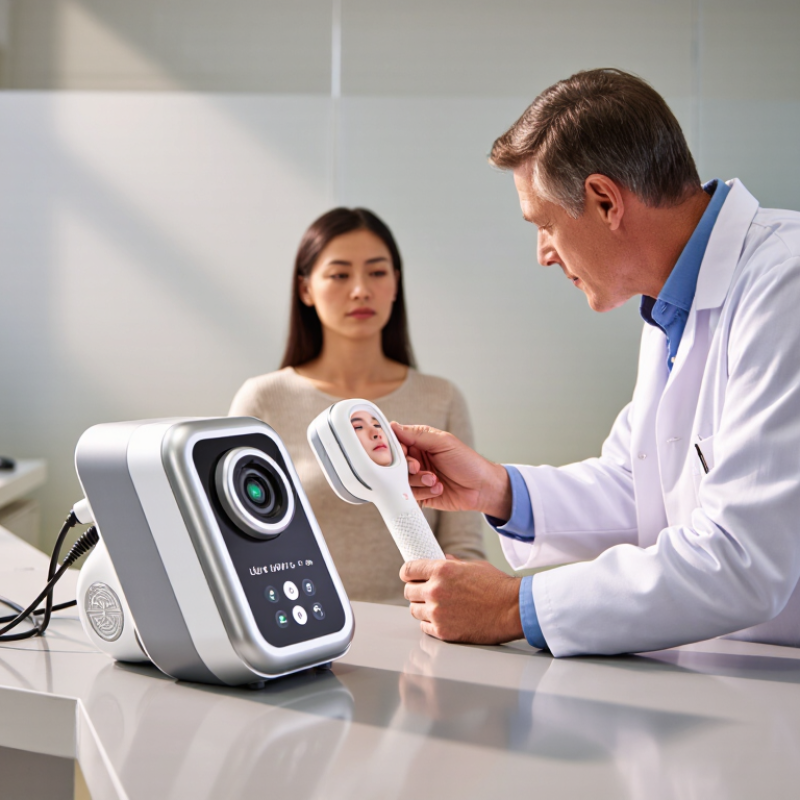
What Is the Best LifeViz Micro for 2026?

What Is LifeViz Micro? 3D Imaging, Hair Analysis, and Clinical Scope

For 2026, the best micro-scale hair imaging tool should do more than create attractive photographs. It should produce repeatable, clinically useful measurements. This handheld 3D system captures scalp contours, hair direction, donor density, and visible thinning. Its close-range camera can compare the same area over time. Lighting matters. Poor lighting can make fine regrowth look stronger than it is.

Hair analysis usually estimates follicular density, shaft thickness, coverage, and miniaturization patterns. It does not diagnose every form of hair loss. A dermatologist may still need medical history, dermoscopy, or laboratory testing. The American Academy of Dermatology estimates that about 80 million people in the United States experience hereditary hair loss. That scale makes consistent monitoring valuable, especially when progress is subtle.

Clinical scope is practical, not unlimited. A provider can use 3D records during consultations, treatment planning, and follow-up visits. The 2023 International Society of Hair Restoration Surgery Practice Census reported roughly 793,000 surgical hair-restoration patients worldwide in 2021. Better visualization may support clearer expectations before treatment. It cannot guarantee an outcome. I would question any measurement taken under changing angles or uncontrolled light. The numbers look precise. They can still be imperfect.

Hair Growth Cycle: A Core Context for Hair Analysis

The chart shows approximate average durations for the three phases of the human scalp-hair cycle. Hair imaging can document visible density, shaft characteristics, and scalp changes, but it cannot determine the full biological cycle from a single image.

Which 2026 Metrics Define the Best LifeViz Micro? Accuracy, Speed, and ROI

The best compact 3D imaging system for 2026 should prove its value through measurable performance, not attractive specifications. Accuracy remains the foundation. Check calibration stability, repeatability, and average measurement error across different users and lighting conditions. A reliable system should produce similar results during morning and afternoon sessions. Small differences matter.

Speed must include the complete workflow. Measure capture time, processing time, file transfer, and preparation between clients. A device that captures quickly but requires frequent retakes may reduce productivity. In practical testing, count how many usable scans are completed within one hour. This figure often reveals more than the advertised scan speed. My own evaluation would include several operators, because real workflows are rarely perfect.

Tips: Track accuracy with reference objects, not visual impressions. Record retake rates for at least four weeks. Calculate ROI using saved staff hours, completed sessions, maintenance, training, and software costs. Review the numbers monthly. Do not trust one impressive demonstration.

ROI should connect performance with daily revenue and staff capacity. If faster scanning adds two completed sessions each day, the impact is easy to estimate. However, demand may fluctuate, and that weakens simple forecasts. A more dependable calculation uses conservative, average, and optimistic scenarios. I would also document user errors, because training gaps can quietly reduce returns. The best choice is not always the fastest device. It is the one that delivers consistent accuracy, manageable speed, and measurable value in real conditions.

How Does LifeViz Micro Align With ISO 20685-1:2018 Scanning Standards?

What Is the Best LifeViz Micro for 2026?

A strong 3D body scanner should align with ISO 20685-1:2018, not only produce attractive images. The standard focuses on anthropometric scanning quality, including participant posture, landmark visibility, repeatability, and measurement accuracy. It does not declare one scanner universally “best.” That depends on the use case, body region, software, and validation method. In practice, a scanner should capture a stable subject within seconds, reduce occlusion around the shoulders and hips, and record a clear calibration process. Small errors still matter.

The SizeUK anthropometric survey measured more than 11,000 people, showing why population diversity must guide scanner testing. A device tested only on young, average-sized users may perform differently with children, older adults, or people with varied body shapes. ISO 20685-1:2018 also supports consistent positioning and controlled conditions. Room lighting, loose clothing, hair, and movement can affect results. These details are easy to overlook. I would treat marketing accuracy claims cautiously unless independent repeatability data is available.

Tips: Ask for test-retest results, not a single accuracy number. Compare scans against physical anthropometric measurements. Record posture, clothing, lighting, and operator experience. Keep the protocol unchanged across sessions. A useful setup may still need refinement, and that limitation should be documented rather than hidden.

Sources: ISO 20685-1:2018; SizeUK anthropometric survey report; International Society for Photogrammetry and Remote Sensing technical guidance.

Can Test-Retest Reliability Reach the Clinical ICC Benchmark of ≥0.90?

What Is the Best LifeViz Micro for 2026?

Can Test-Retest Reliability Reach the Clinical ICC Benchmark of ≥0.90?

For compact 3D imaging, repeatability matters more than a sharp first scan. The accepted clinical benchmark is often an intraclass correlation coefficient (ICC) of at least 0.90. Koo and Li’s 2016 reliability guidelines classify ICC values above 0.90 as excellent. However, that threshold describes agreement under defined testing conditions. It does not guarantee reliable results in every clinic.

A credible test-retest study should use the same operator, lighting, camera distance, posture, and scanning instructions. Participants should complete two scans within a controlled interval. The COSMIN measurement framework also recommends reporting confidence intervals, measurement error, and minimal detectable change. ICC alone can hide important variation. A device may report ICC 0.92 while producing a visible three-millimeter shift in facial landmarks.

Look closely at the protocol.

For a stronger 2026 evaluation, researchers should recruit varied skin tones, ages, and facial structures. They should also include inexperienced operators, not only trained technicians. Bland-Altman plots can reveal systematic drift between scans. Standard error of measurement can show whether a small treatment change exceeds normal scanning noise.

The difficult question is consistency outside laboratory conditions. A reliable scanner should remain stable after repositioning, brief movement, and ordinary room-light changes. This is where many promising results become less certain. A high ICC is valuable, but it is not the whole clinical story.

Which LifeViz Micro Configuration Fits Clinic Workflow and Patient Volume?

The best compact imaging configuration depends on clinic workflow, not the highest specification.

A low-volume clinic may need a simple camera arrangement, guided capture, and fast file transfer. Staff can learn it without interrupting consultations. Short appointments matter. A patient should not wait while technicians adjust complex settings.

Higher-volume clinics may benefit from a multi-camera setup, dedicated lighting, and automated image organization.

These features can reduce repeated positioning and improve consistency between operators. A clear room layout also helps. Marked floor positions, stable lighting, and a trained assistant can save several minutes per patient. That time becomes significant across a busy surgical schedule.

Patient experience still needs attention. Explain each image before capture, protect privacy, and obtain documented consent. Images should follow a secure naming and storage process.

Clinicians should compare the system’s measurements with accepted clinical methods before relying on them. Independent training and routine quality checks strengthen confidence.

I would not pretend that automation removes every error.

Hair movement, posture, reflections, and uneven lighting can affect results. Small flaws remain.

A practical evaluation could track setup time, retake rates, staff training hours, and daily patient capacity. Review those figures after several weeks, not after one impressive demonstration. The most suitable configuration is the one staff can use consistently, while patients feel informed and comfortable.

FAQS

Which metrics best evaluate a compact 3D imaging system in 2026?

Focus on accuracy, complete workflow speed, repeatability, and return on investment. Measure results across users, lighting conditions, and different times of day. Small differences matter.

How should accuracy be tested?

Use reference objects instead of visual impressions. Check calibration stability, repeatability, and average measurement error. Compare morning and afternoon results. Record retakes for at least four weeks.

What does practical scanning speed include?

Count capture, processing, file transfer, and preparation time. A fast capture is not enough. Measure usable scans completed within one hour. Frequent retakes can quietly reduce productivity.

How can a clinic calculate realistic ROI?

Include saved staff hours, completed sessions, maintenance, training, and software costs. Compare these costs with daily revenue and staff capacity. Use conservative, average, and optimistic scenarios. Simple forecasts may fail when patient demand changes.

Which configuration suits a low-volume clinic?

A simple camera arrangement may be sufficient. Guided capture and quick file transfer can reduce interruptions. Staff should learn the workflow without delaying consultations. Short appointments matter.

What configuration may help a high-volume clinic?

Multiple cameras, dedicated lighting, and automated image organization may improve consistency. Marked floor positions can reduce repeated positioning. A trained assistant may save several minutes per patient. Those minutes accumulate quickly.

How can clinics improve patient comfort and privacy?

Explain each image before capture. Obtain documented consent. Use secure naming and storage procedures. Patients should understand the process, not simply stand still.

What errors can affect imaging results?

Hair movement, posture changes, reflections, and uneven lighting can distort results. Training gaps may also increase retakes. Automation does not remove every error. That assumption needs review.

How should clinics compare systems before purchasing?

Track setup time, training hours, retake rates, and daily patient capacity. Test several operators during normal clinic conditions. Review the numbers after several weeks. One impressive demonstration proves very little.

Conclusion

This guide examines what makes LifeViz Micro a strong 3D imaging solution for 2026, focusing on practical performance rather than marketing claims. It explains how the system can support three-dimensional capture, hair and scalp analysis, and broader clinical documentation while considering image accuracy, scanning speed, ease of use, and potential return on investment. The discussion also introduces the role of consistent measurement protocols when evaluating clinical imaging equipment.

The article further explores how LifeViz Micro may be assessed against ISO 20685-1:2018 scanning principles, including repeatability, data quality, and standardized workflows. It considers whether test-retest reliability can approach a clinical intraclass correlation coefficient benchmark of 0.90 or higher, while recognizing that results depend on operators, subjects, lighting, and setup. Finally, it compares configuration priorities for different clinic sizes, patient volumes, staffing models, and reporting needs, helping readers identify a practical balance between capability, efficiency, and long-term value.

Arthur

Arthur

Arthur is a professional marketing specialist with extensive experience in product communication, content strategy, and customer-focused brand development. As a key member of the company, he combines strong market insight with a deep understanding of the company’s products, enabling him to explain......