
Aesthetic Medicine & 3D Imaging Blog
Latest clinical research, technical advances, and practice growth insights from LifeViz®.
Advanced Facial Volume Loss & 3D Diagnostic Systems
Explore our CE-certified clinical hardware range engineered for aesthetic plastic surgeons, dermatologists, and medical research facilities requiring sub-millimeter volumetric accuracy.

3D AI Smart Full Face Skin Analyzer HD Imaging Touch Screen Scanner
- Sub-millimeter 3D Volumetric Mesh
- Integrated AI Facial Recognition
- Real-time Deep Moisture & Acne Mapping

Skin Analysis Device Facial Scanner Diagnosis 3D System
- Multi-Spectral Pigmentation Detector
- 3D Aging Progression Simulation
- Quantitative Pore & Sebum Analysis

Medical-Grade AI Skin Diagnostic Device Puremi 4th Gen 6 Spectrums
- 19 Comprehensive Clinical Reports
- Dual Front/Side Angle Capture Modes
- Cross-Polarized Subcutaneous Optics

Portable Facial Analysis Skin Monitor Analyzer 3D Machine
- Lightweight Ergonomic Chassis
- Instant 3D Volumetric Comparison
- Designed for Multi-Clinic Operations

Medical Grade Portable Woods Lamp & Microscope Dermatoscope
- Rechargeable High-Precision Optics
- Deep Epidermal Melanoma/Vascular Check
- Microstructural Follicle Diagnostics

3D Skin Analyzer Facial Scanner Machine for Rejuvenation Tracking
- Automated Vector Alignment
- Volume Shift Heatmap Software
- Cloud EMR System Syncing

Medical Grade Skin Diagnostic System for Subcutaneous Evaluation
- MDR 2017/745 Safety Compliance
- High-Resolution RGB/UV/PL Imaging
- Symmetry & Vector Tracking
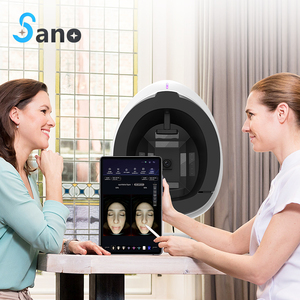
2026 AI Skin Analysis & Volumetric Pore Detector Machine
- Ultra-Fast 15-Second Scanning Cycle
- Automated Filler Volume Calculator
- Multi-User Cloud Archiving
1. The Biomechanics of Age-Related Facial Volume Loss & Quantitative Assessment Metrics
Facial aging is a complex, three-dimensional process involving the dynamic involution of superficial and deep fat compartments, skeletal resorption, muscular atrophy, and dermal elastosis. Traditional 2D clinical photography, while standard in aesthetic consultations, fails to capture the spatial vector shifts, volumetric loss in the midface, lateral cheek deflation, and mandibular contour changes. A true CE Certified Facial Volume Loss Assessment System integrates high-resolution stereophotogrammetry to convert optical data into sub-millimeter 3D polygonal meshes, offering objective, quantifiable diagnostic data.
From an anatomical perspective, facial volume loss primarily impacts the deep medial cheek fat (DMCF), sub-orbicularis oculi fat (SOOF), and temporal fat pads. As structural support diminishes, secondary superficial fat pads shift inferiorly, resulting in nasolabial fold accentuation, marionette lines, and jowl formation. For plastic surgeons and aesthetic dermatologists, accurately measuring the precise volume loss in cubic centimeters (cc or mL) is vital before executing biostimulatory filler injections (such as Poly-L-Lactic Acid, Calcium Hydroxyapatite, or cross-linked Hyaluronic Acid) or surgical fat grafting.
Differential Heatmap Rendering
Superimposes baseline 3D scans over post-treatment models, generating color-coded volumetric gain/loss maps (Blue = volume loss/depression; Red/Yellow = volume expansion/fill).
Volumetric Vector Distance Analysis
Measures exact anatomical distances across anatomical landmarks (zygomatic arch, menton, mid-buccal) to evaluate tissue sag versus projection gains.
Automated AI Mesh Alignment
Eliminates positional tilt artifacts by using rigid point-cloud registration (Iterative Closest Point algorithm), ensuring baseline and follow-up images align perfectly.
2. CE Certification Standards & Regulatory Compliance for Medical Facial Scanners
In global B2B procurement, procuring non-compliant diagnostic hardware poses severe legal, clinical, and financial risks. A medical-grade CE Certified Facial Volume Loss Assessment System manufactured for global distribution must comply strictly with the European Union Medical Device Regulation (EU MDR 2017/745) under Class IIa or Class I software/hardware guidelines, alongside international medical equipment safety standards.
CE Certification verifies that the equipment has undergone rigorous safety and performance testing. Crucial medical compliance criteria include:
- EN 60601-1 / IEC 60601-1 (Electrical Safety): Ensures patient and operator safety against electrical shocks, thermal hazards, and mechanical failures during high-intensity illumination capture cycles.
- IEC 60601-1-2 (Electromagnetic Compatibility - EMC): Guarantees that the high-frequency optical sensors and microprocessors operate without interference from or towards other medical systems (e.g., laser platforms, radiofrequency units).
- IEC 62471 (Photobiological Safety of Lamps and Lamp Systems): Validates that cross-polarized flashes, UV light-emitting diodes, and structural light projectors emit wavelengths safe for human retinal and dermal exposure.
- ISO 10993 (Biocompatibility): Mandates that touchpads, chin rests, and positioning frames touching patient skin are non-toxic, non-irritating, and hypoallergenic.
- GDPR & HIPAA Data Encryption Standards: Cloud-based systems storing 3D patient face scans must feature 256-bit AES encryption to protect Protected Health Information (PHI) against unauthorized breaches.
| Compliance Standard | Testing Objective / Technical Requirement | Clinical & Commercial Implication |
|---|---|---|
| EU MDR 2017/745 (CE) | Medical Device Directive replacing MDD 93/42/EEC with strict post-market surveillance. | Legal permission for sales & clinical usage across EU member states and global markets honoring CE. |
| ISO 13485:2016 | Quality Management System (QMS) specifically tailored for medical device design & manufacturing. | Assures consistent batch-to-batch manufacturing precision and reliable hardware longevity. |
| IEC 62471 Photobiological | Evaluates optical radiation hazards from multi-spectral flashes (RGB, UV, Polarized). | Protects patient vision and delicate facial dermis during high-intensity 3D photographic capture. |
| Sub-Millimeter 3D Calibration | Validates volumetric measurements against phantom models with < 0.1 mm volumetric tolerance. | Guarantees scientific accuracy when demonstrating 0.5 mL filler volume additions to patients. |
3. Future B2B Procurement Trends: The Shift Toward AI & Cloud-Based Diagnostics (2026–2030)
The global market for facial volume analysis and skin diagnostic scanners is undergoing a massive transformation. B2B purchasers—ranging from franchised medical spa chains to academic hospital dermatological clinics—are migrating away from legacy static 2D skin analyzers toward integrated 3D AI-powered ecosystem solutions. Enterprise buyers must consider four key technological shifts when sourcing inventory for 2026 and beyond:
A. Integration of Generative AI for Predictive Aesthetic Outcomes
Modern purchasers require hardware that does not merely evaluate present volumetric deficits, but accurately models future volume loss trajectories based on epidemiological aging algorithms. Next-generation systems leverage deep-learning neural networks trained on millions of clinical face scans to simulate progressive fat compartment resorption, aiding practitioners in building long-term preventive treatment plans.
B. Multi-Spectral Deep Subcutaneous Imaging
Beyond surface topology, 3D volume loss assessment systems now combine specular, parallel-polarized, and cross-polarized light with UV fluorescence (365 nm). This allows clinicians to correlate superficial volume loss with underlying vascularity, dermal collagen density decline, and deep pigmentation changes, presenting a holistic diagnostic picture in a single 15-second scanning cycle.
C. Seamless Cloud Synchronization & Multi-Site Scalability
Multi-location aesthetic enterprises require centralized database architectures. Systems such as the LifeViz® Neo Cloud system enable plastic surgeons to capture a 3D scan at Clinic A, analyze volumetric changes remotely at Clinic B, and present the 3D interactive model to the patient via secure tablet interfaces. Centralized EMR integration via RESTful APIs and DICOM standards is now a mandatory RFP requirement for hospital procurement tenders.
D. Quantitative Biomarker Tracking for Biostimulatory Products
With the exponential growth of regenerative medicine—such as exosomes, platelet-rich plasma (PRP), micro-fat grafting, and biostimulatory fillers—clinicians require objective proof of neo-collagenesis over 3, 6, and 12-month periods. Modern 3D software calculates sub-dermal volume growth curves, offering definitive scientific validation that boosts patient retention and treatment plan compliance.
Why Partner With Us as Your CE Certified Manufacturer & Supplier?
As a specialized OEM/ODM manufacturer with 25+ years of optical engineering expertise, 14 international patents, and deployments in over 50 countries, we provide global medical aesthetic distributors and device brands with robust, scalable production capabilities.
ISO 13485 Manufacturing
State-of-the-art cleanroom optical assembly lines ensuring every sensor, strobe, and lens meets strict medical-grade calibration standards.
Full SDK & White-Labeling
Customizable software UI, private-label casing designs, SDK API integration for proprietary clinical software, and custom branding.
Global Regulatory Support
Complete technical documentation packages (STED), CE MDR certificates, RoHS compliance, and FDA registration support for distributors.
Frequently Asked Questions (FAQ) for B2B Buyers
Answers to common technical, legal, and operational questions regarding the sourcing, installation, and clinical operation of our 3D Facial Volume Loss Systems.
Q1: How does the 3D Facial Volume Loss Assessment System quantitatively measure volume change in cubic centimeters?
The system utilizes high-precision stereophotogrammetry or dual-camera structured light optics to build a 3D point cloud of the patient's face. By taking a baseline pre-treatment scan and aligning it with post-treatment follow-up scans using rigid Iterative Closest Point (ICP) algorithms, the software isolates specific target regions (e.g., midface, tear trough, temporal valley). The system then calculates the volumetric displacement vector between the two surfaces, producing exact measurements in cubic centimeters (cc / mL) along with color-coded volumetric heatmaps.
Q2: What certifications are included with your volume loss assessment systems for international distribution?
Our manufacturing plant operates under ISO 13485 medical quality management certification. All exported models comply with CE Medical Device Regulations (EU MDR 2017/745), IEC 60601-1 electrical safety, IEC 60601-1-2 EMC standards, and IEC 62471 photobiological safety standards. Technical files, Test Reports, and CE Certificates of Conformity are provided to authorized B2B distributors for rapid local registration.
Q3: Can these systems differentiate between post-injection edema (swelling) and actual structural volume retention?
Yes. By performing longitudinal tracking at multiple intervals (e.g., Day 0 pre-injection, Day 14 post-swelling resolution, and Month 6 follow-up), the software's longitudinal trend analysis graphs show the decline of transient edema versus stable biostimulatory/filler integration. Furthermore, cross-polarized sub-dermal vascular analysis helps clinicians identify localized inflammatory redness associated with temporary swelling.
Q4: What is the minimum lighting or darkroom requirement for operating the 3D facial scanner in a clinic setting?
Our systems feature integrated high-intensity optical LED xenon strobes with cross-polarization filters, which completely isolate internal light from ambient clinic room lighting. No specialized darkroom is required; tests demonstrate that scans taken under standard office illumination retain sub-0.1 mm surface detail repeatability.
Q5: What OEM/ODM customization options are available for medical device brand owners?
We offer comprehensive white-labeling solutions including custom industrial chassis color schemes, laser-etched brand logos, custom UI skinning, multi-language translation (supporting over 15 languages), and modular software feature locks. Our software engineers also provide API/SDK documentation to connect scanner data directly into your enterprise Electronic Medical Record (EMR) or CRM platform.
Q6: How is patient data protected, and does the software comply with HIPAA and GDPR regulations?
Security is paramount in modern medical software. All 3D patient files, images, and diagnostic reports stored locally or in cloud systems use 256-bit AES encryption at rest and TLS 1.3 encryption in transit. The software includes multi-tier role-based access control, anonymized export modes for research, and full audit logging compliant with both EU GDPR and US HIPAA guidelines.
Q7: What is the typical lead time and warranty structure for bulk distributor orders?
Standard production lead time for OEM orders ranges between 2 to 4 weeks depending on customization depth. All devices come with a standard 24-month factory warranty covering main optical components, sensors, and mainboards, supplemented by continuous software updates and 24/7 technical engineering support.
Elevate Your Aesthetic Practice or Distribution Portfolio
Contact our global medical technology specialists to request technical specifications, factory-direct OEM quotation sheets, or schedule a live virtual software demonstration.