
Aesthetic Medicine & 3D Imaging Blog
Latest clinical research, technical advances, and practice growth insights from LifeViz®.
CE Certified Clinical Imaging Cameras & Diagnostic Scanners

3D AI Smart Full Face Skin Analyzer HD Imaging Touch Screen Facial Scanner Detect Acne Pigmentation Wrinkles Pores Moisture
- High-Precision 3D Surface Reconstruction
- Automated Acne & Moisture Quantification
- Integrated HD Touch Screen Control

Skin Analysis Device Facial Scanner Diagnosis 3D System Testing Moisture Evaluation Digital Inspection Pigmentation Aging Pore
- Sub-Surface Pigmentation Mapping
- Digital Aging Vector Analysis
- CE Class I Certified Optical Optics

Medical-Grade AI Skin Diagnostic Device Puremi Fourth Gen 6 Spectrums 19 Reports Dual Shooting Modes Front/Side Face Analysis
- 6 Precision Optical Light Spectrums
- 19 Automated Diagnostic Clinical Reports
- Dual Shooting Dual-Camera System

High Quality Portable Facial Analysis Skin Monitor Analyzer 3D Digital Skin Analyzer Machine For Salon
- Compact Ergonomic Form Factor
- Real-Time RGB & UV Feature Detection
- Wireless Cloud Sync Integration

NEW Portable Woods Lamp Medical Grade Microscope Dermatoscope Rechargeable Skin Hair Analyzer
- Integrated Wood's Light UV Spectrum
- High-Magnification Optical Zoom
- Rechargeable Lithium Medical Battery

New Arrival 3D Skin Analyzer Facial Machine Skin Analysis Scanner Facial Skin Analyzer Machine
- Rapid 15-Second Complete Scanning
- Volumetric Depth Heatmap Overlay
- Multi-Client Comparative Tracking

Medical Grade Skin Analyzer Device With Imaging for Skin Condition Diagnosis
- Cross-Polarized Vascular Analysis
- Subsurface Chromophore Separation
- EMR / PACS System Interoperability
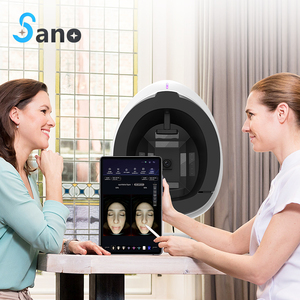
2026 Skin Analysis Machine UV Pore Detector Skin Scanner Analysis Ai Skin Analyzer Beauty Machine For Salon
- Next-Gen UV Porphyrin Detection
- AI Deep Learning Feature Classification
- Standardized Repeatable Positioning
Engineering Standards for CE Certified High-Resolution Clinical Cameras
In modern aesthetic medicine, plastic surgery, and clinical dermatology, standard 2D photography fails to provide the reproducibility, depth precision, and spectral segregation required for evidence-based patient consultations and clinical trials. As leading **CE Certified High Resolution Clinical Imaging Camera Manufacturers**, our engineering architecture bridges the gap between hardware optical precision and software algorithmic quantification.
High-resolution clinical imaging demands multi-spectral illumination systems that isolate chromophores within distinct epidermal and dermal layers. By combining RGB White Light, Cross-Polarized Light, Parallel-Polarized Light, and UV 365nm Fluorescence, modern clinical cameras expose subsurface micro-structures that are completely invisible to the unassisted human eye.
Cross-Polarized Optical Filtering
Eliminates specular surface reflection, allowing precise visualization of subsurface vascular erythema, telangiectasia, and deep dermal melanin distribution without invasive procedures.
3D Stereophotogrammetry
Dual-sensor stereoscopic optical capture calculates spatial coordinates down to micro-meter tolerances, generating volumetric difference heatmaps (in cubic centimeters / cc) for dermal filler and surgical assessment.
Wood's Light & UV Fluorescence
Narrowband UV illumination excites bacterial porphyrins (Propionibacterium acnes) and identifies dyschromia, sun damage, and lipid sebum blockages in hair follicles.
Clinical Camera Specifications vs. Consumer-Grade Analyzers
| Performance Metric | CE Medical-Grade Imaging Cameras | Commercial 2D Consumer Analyzers |
|---|---|---|
| Regulatory Certification | CE MDR (EU 2017/745), Class I/IIa Medical, ISO 13485 | Standard CE EMC / RoHS Consumer Directives Only |
| Lighting Reproducibility | Stroboscopic Dual Xenon / LED (Controlled Flux < 0.5% variance) | Ambient Uncalibrated Continuous LED Lighting |
| Volumetric Reconstruction | Native 3D Point-Cloud Mesh Calculation (Accuracy ± 0.1mm) | 2D Soft-Focus Shadow Interpolation (Non-quantitative) |
| Subsurface Chromophore Mapping | Separates RGB into Independent Melanin & Hemoglobin Maps | Basic Color Contrast Tuning (RGB Saturation Manipulation) |
| EMR / PACS Interoperability | DICOM 3.0 Compatible, Encrypted Tele-Dermatology Cloud | Proprietary Isolated JPEG File Storage |
| Clinical Trial Validation | Peer-reviewed in 100+ International Academic Journals | Unvalidated Marketing Visuals |
Future Procurement Trends for Clinical Imaging Equipment (2026–2030)
As healthcare systems and private aesthetic groups scale up operations, procurement departments are shifting focus from standalone photography devices to integrated, intelligent diagnostic platforms. Strategic purchasers must evaluate five key procurement trends when sourcing clinical imaging camera manufacturers over the next decade:
1. Edge-AI Landmark Alignment
Hardware devices now incorporate real-time edge processing to guide clinical staff during patient positioning. Integrated sensor arrays enforce exact tilt, pitch, and yaw alignment before image capture, eliminating operator error across multi-location clinic chains.
2. Cloud 3D Engine Offloading
Modern clinical cameras decouple spatial image acquisition from local rendering hardware. RAW multi-angle images are encrypted and transmitted to cloud-native rendering pipelines, generating interactive 3D surface models in seconds for instant access on any desktop or tablet.
3. Dynamic Volumetric Difference Mapping
Purchasers increasingly demand quantitative volumetric tracking for facial rejuvenation (hyaluronic acid fillers, biostimulators) and body contouring. Next-generation cameras instantly calculate pre- vs. post-treatment volume gain or loss in exact cubic centimeters (cc).
Furthermore, global regulatory bodies are enforcing stricter data security rules. Medical imaging cameras must feature hardware-level AES-256 encryption, zero-trust cloud network architecture, and full compliance with GDPR and HIPAA standards to protect patient identity and clinical imagery.
Innovations Shaping the Next Generation of Dermatological Optics
The global clinical imaging camera landscape is undergoing rapid innovation driven by advancements in optoelectronics, deep learning classification networks, and synthetic simulation engines. Key technical trajectories include:
- Hyperspectral and Multispectral Narrowband Optics: Transitioning beyond standard RGB/UV into specific absorption bandwidths (540nm and 570nm) to pinpoint hemoglobin oxygenation states and dermal capillary neo-vascularization.
- Generative Predictive Simulation Engines: Combining accurate 3D patient morphometry with AI physics engines to model surgical rhinoplasty, breast augmentation, and midface lifting outcomes with photorealistic fidelity.
- Hybrid Micro-Macro Dermoscopy Systems: Integrating full-face stereoscopic photography with handheld high-magnification dermatoscopy probe attachments for continuous diagnostic workflows from macroscopic symmetry down to cellular melanocytic evaluation.
Why Global Aesthetic Leaders Partner With Our Manufacturing Facilities
With over two decades of optical manufacturing experience, our production line adheres strictly to international medical device standard ISO 13485:2016. Every clinical imaging unit undergoes rigorous multi-stage calibration to guarantee absolute color fidelity, geometric accuracy, and safety standard compliance.
Medical-Grade Regulatory Compliance
Fully compliant with CE MDR (EU 2017/745), US FDA device standards, and international IEC 60601-1 electrical medical safety requirements for seamless global distribution.
Patented Optical Alignment Hardware
Protected by 14 international patents covering dual-flash stereophotogrammetry, light guiding arrays, and rapid automated target-locking mechanisms.
Complete OEM/ODM Customization
We deliver end-to-end original equipment manufacturing—from industrial shell design and custom optical lens selection to branded AI software UI development.
Frequently Asked Technical Questions on Clinical Imaging Cameras
Why is CE Certification mandatory for clinical imaging cameras in medical aesthetics?
CE certification under the EU Medical Device Regulation (MDR 2017/745) ensures that the imaging device meets rigorous health, safety, and performance metrics. In clinical settings, uncertified consumer cameras pose electrical compliance risks and lack the standardized optical stability required for legitimate clinical documentation, legal protection, and peer-reviewed research.
How does 3D stereophotogrammetry differ from 2D photography in aesthetic evaluation?
Standard 2D photography captures flat pixel arrays vulnerable to ambient lighting changes, camera distances, and angles. 3D stereophotogrammetry uses calibrated multi-angle sensor capture to construct a true 3D spatial mesh. This allows clinicians to accurately measure exact volumetric changes (in cc), depth profiles of wrinkles, and structural contours independent of lighting environment fluctuations.
What optical spectral modes are included in high-end diagnostic skin analyzers?
Our medical-grade cameras incorporate standard RGB daylight, Cross-Polarized light (removes surface shine to reveal vascular structures and deep melanin), Parallel-Polarized light (enhances surface texture and skin pore micro-relief), and Wood's/UV light (365nm wavelength to detect porphyrin fluorescence, sebum concentration, and sun damage).
How does volumetric heatmap tracking aid patient consultation conversion?
Volumetric heatmaps transform abstract clinical explanations into clear visual data. By color-coding volume additions (green/blue) or reductions (red/yellow) with high spatial accuracy, patients can visually comprehend subtle surgical or cosmetic results, boosting consultation trust, compliance, and retention.
What OEM/ODM customization services do you provide for distributors?
We offer complete OEM and ODM services including custom industrial casing design, optical filter tuning, integrated micro-screen installation, branded software UI/UX, customized diagnostic reporting templates, and localized EMR database connectivity.
How is patient data protected under international privacy regulations?
Our hardware and associated cloud platforms employ AES-256 end-to-end data encryption, anonymized landmark tracking, and strict access controls compliant with HIPAA (USA) and GDPR (Europe) standards, ensuring confidential patient data security.
What is the calibration frequency and operational lifespan of these cameras?
Engineered with solid-state LED/Xenon flash arrays and anti-drift optical sensors, our systems maintain precise optical calibration for over 50,000 continuous captures. Annual software alignment verification ensures long-term operational accuracy over an expected 7 to 10-year device lifespan.
Partner With a Leading Medical Imaging Manufacturer
Upgrade your aesthetic clinic, dermatology center, or distribution network with CE Certified high-resolution clinical imaging technology. Contact our engineering team today for technical catalogs, OEM quotes, and live product demonstrations.