
Aesthetic Medicine & 3D Imaging Blog
Latest clinical research, technical advances, and practice growth insights from LifeViz®.
Flagship Wholesale 3D & AI Skin Diagnostic Systems
Explore high-precision diagnostic scanners engineered for medical aesthetic clinics, dermatologists, and global distributor OEM/ODM customization.

3D AI Smart Full Face Skin Analyzer HD Imaging Touch Screen Facial Scanner Detect Acne Pigmentation Wrinkles Pores Moisture
- High-Resolution HD Touch Screen Console
- Multi-layered Acne & Pigment Mapping
- Real-time AI Moisture Quantification

Skin Analysis Device Facial Scanner Diagnosis 3D System Testing Moisture Evaluation Digital Inspection Pigmentation Aging Pore
- Deep Dermal Pigmentation Imaging
- Quantitative Pore & Aging Assessment
- Automated Patient Tracking Dashboard

Medical-Grade AI Skin Diagnostic Device Puremi Fourth Gen 6 Spectrums 19 Reports Dual Shooting Modes Front/Side Face Analysis
- 6 Precision Optical Spectrums
- 19 Clinical Diagnostic PDF Reports
- Dual Shooting (Frontal & 45° Lateral)

High Quality Portable Facial Analysis Skin Monitor Analyzer 3D Digital Skin Analyzer Machine For Salon
- Ultra-Compact Portable Chassis
- High-Speed 3D Surface Reconstruction
- Optimized for Med-Spas & Salons

NEW Portable Woods Lamp Medical Grade Microscope Dermatoscope Rechargeable Skin Hair Analyzer
- Filtered UV Wood's Light Inspection
- High-Magnification Trichology Lens
- Long-Life Li-ion Battery Powered

New Arrival 3D Skin Analyzer Facial Machine Skin Analysis Scanner Facial Skin Analyzer Machine
- Quick-Scan 3D Topographical Map
- RGB/UV/Polarized Lighting Array
- Comparative Before/After Simulation

Medical Grade Skin Analyzer Device With Imaging for Skin Condition Diagnosis
- Clinical Validation Diagnostic Accuracy
- Vascular & Erythema Mapping Module
- Direct EMR System Integration
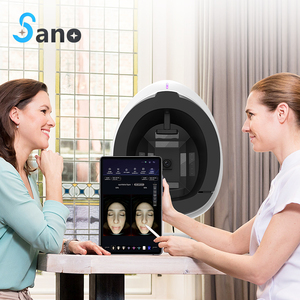
2026 Skin Analysis Machine UV Pore Detector Skin Scanner Analysis Ai Skin Analyzer Beauty Machine For Salon
- 2026 Flagship AI Algorithm Engine
- Deep UV Fluorescence Porphyrin Detection
- Automated Skincare Product Matching
OEM/ODM Manufacturing Authority & Benchmark Standards
Backed by over two decades of optical innovations, patented 3D surface reconstruction algorithms, and clinical validation trusted by plastic surgeons and dermatologists across 50+ countries.
Clinical Precision Standard: Our manufacturing plant operates under ISO 13485 quality control systems. Every 3D medical aesthetic scanner undergoes 72-hour continuous optical calibration to guarantee sub-millimeter volumetric accuracy (down to 50 microns) for facial volume change, vector displacement, and tissue alteration tracking.
Executive Whitepaper: The Evolution of 3D Medical Aesthetic Scanning
An in-depth analysis of global market shifts, optical engineering breakthroughs, and B2B procurement strategies for aesthetic clinics, hospital chains, and distributors.
In the contemporary landscape of aesthetic medicine, plastic surgery, and clinical dermatology, quantitative visualization has replaced subjective visual assessments. The global medical aesthetic industry is undergoing a paradigm shift driven by patient demand for objective, data-backed proof of treatment efficacy. Traditional 2D clinical photography, while useful, suffers from fundamental flaws: inconsistent ambient lighting, variable patient positioning, lack of volumetric measurement, and an inability to map subsurface tissue structures accurately.
As a leading China wholesale manufacturer and exporter of 3D medical aesthetic scanners, our engineering team collaborates with international research institutes to bridge the gap between high-end clinical imaging and cost-effective bulk production. Modern 3D facial scanners integrate multi-spectral illumination—combining standard RGB white light, cross-polarized light, parallel-polarized light, filtered ultraviolet (UV) light, and Wood’s light—to reconstruct a complete digital twin of the patient's skin and underlying structural volume.
Volumetric Quantification
Precise measurement of dermal volume loss or gain in cubic centimeters (cc). Crucial for evaluating hyaluronic acid (HA) filler retention, fat grafting longevity, and midface lifting procedures.
Subsurface Vascular Mapping
Cross-polarized optical filters isolate hemoglobin absorption spectra, allowing clinicians to map erythema, telangiectasia, rosacea, and post-laser vascular responses with high clarity.
ROI & Consultation Conversion
Clinics equipped with interactive 3D simulation soft-ware experience a 35% higher patient conversion rate during consultation by visually projecting post-surgical or non-invasive treatment outcomes.
Furthermore, China’s industrial ecosystem for medical aesthetic equipment has matured dramatically. By leveraging advanced optoelectronic supply chains in Shenzhen, Guangzhou, and Suzhou, certified Chinese factories offer OEM/ODM solutions that match or exceed Western clinical performance standards while delivering a 40% to 60% reduction in capital expenditure for global buyers. This economic advantage enables international distributors to offer premium diagnostic hardware to private clinics, medical spas, and university research hospitals at highly competitive price points.
Technical Benchmark Matrix: Diagnostic Spectrum & Hardware Specifications
A detailed technical comparison of diagnostic lighting spectrums and their clinical applications in 3D medical scanning.
| Light Spectrum / Mode | Wavelength Range (nm) | Primary Clinical Focus | Diagnostic Information Gain |
|---|---|---|---|
| Standard RGB White Light | 400 – 700 nm | Surface Micro-Relief & Pore Structure | Captures natural skin tone, macro texture, fine lines, and morphological wrinkles for baseline 3D mesh mapping. |
| Cross-Polarized Light | 520 – 630 nm (Filtered) | Erythema, Vascularity & Inflammation | Eliminates specular surface reflection (glare) to reveal deep epidermal redness, telangiectasia, and active acne lesions. |
| Parallel-Polarized Light | 400 – 700 nm (Co-linear) | Surface Smoothness & Keratin Layer | Enhances surface glare to highlight skin roughness, desquamation, pore enlargement, and early-stage fine lines. |
| UV Fluorescence Light | 365 – 385 nm | Porphyrins, Sebum & Deep Pigment | Excites bacterial porphyrins (Cutibacterium acnes) to fluoresce orange/red, while illuminating hidden UV spot damage and dyschromia. |
| Wood's Light Mode | 320 – 400 nm (Peak 365nm) | Epidermal vs. Dermal Melasma | Differentiates hyperpigmentation depth: epidermal melasma accentuates under Wood's light, whereas dermal melasma remains unchanged. |
| 3D Stereophotogrammetry | Multi-Angle Sensor Array | Volumetric Vector Displacement | Calculates exact XYZ surface coordinates with sub-millimeter precision to quantify tissue sagging, cheek augmentation, and rhinoplasty profiles. |
Future Procurement Trends in 3D Aesthetic Scanners (2026–2030 Outlook)
Key technological and purchasing trends shaping B2B sourcing strategies for medical device importers and aesthetic chain operations.
1. Cloud-Native Ecosystems & AI Mesh Generation
Hardware standalone software is rapidly giving way to cloud-native platforms (e.g., Cloud 3D Photography). Scanners are now engineered as smart IoT edge devices that capture raw multi-spectral data and stream it to cloud servers where deep-learning algorithms reconstruct ultra-high-density 3D face/body meshes in seconds. This architecture reduces hardware processing costs while enabling seamless multi-site clinic synchronization and remote specialist consultations.
2. Hybrid Full-Face & Body Contouring Systems
Whereas historical scanners were strictly divided between facial analyzers and bulky body simulation booths, procurement preferences for 2026 and beyond favor modular, multi-positional scanners. B2B buyers actively seek versatile systems capable of switching between high-resolution facial micro-structure analysis and full-body volumetric contouring (breast augmentation, buttock reshaping, and lipolysis tracking) within a single compact footprint.
3. Rigorous EMR Integration & HIPAA/GDPR Compliance
Global regulatory bodies are enforcing stricter data privacy mandates. Future procurement criteria dictate that 3D medical scanners must feature end-to-end AES-256 data encryption, role-based access controls, and standardized API/HL7 connectors to integrate effortlessly with hospital Electronic Medical Record (EMR) systems and practice management software.
4. Predictive AI Aging & Treatment Simulation
Next-generation skin analyzers do not merely record present skin conditions; they utilize generative neural networks trained on millions of clinical facial datasets to model future skin degradation over 3, 5, or 10 years. Concurrently, they simulate exact post-treatment outcomes for collagen stimulators, thread lifts, and fractional CO2 lasers, empowering clinicians to set realistic patient expectations.
5. Accelerated OEM Customization & Localized SDKs
International medical aesthetic brands are moving away from off-the-shelf white label products toward deeply customized OEM/ODM partnerships. Top-tier Chinese manufacturers now supply customized optical engines, branded software GUI interfaces, localized multi-language UI, and full Software Development Kits (SDKs) to allow enterprise buyers to embed 3D scanning technology into their proprietary clinical diagnostic suites.
Why Source 3D Medical Aesthetic Scanners From Our Factory?
Empowering global distributors, brand owners, and medical groups with world-class optoelectronic engineering and unmatched manufacturing reliability.
As a leading pioneer in 3D medical photography and aesthetic skin diagnostic technology, our state-of-the-art manufacturing campus in China spans over 15,000 square meters, housing automated SMT lines, optical lens assembly cleanrooms, and stringent environmental testing chambers. Our core enterprise strengths include:
- Patented Optical Systems: We hold 14 registered patents spanning stereophotogrammetric multi-camera array alignment, polarized light isolation filters, and high-uniformity LED strobe illumination systems.
- Clinical Validation & Certification: Our entire product lineup holds CE, FDA-cleared equivalents, ISO 13485 medical device quality certification, RoHS, and FCC compliance, ensuring smooth customs clearance and regulatory approval across Europe, North America, the Middle East, and Latin America.
- Full-Stack OEM/ODM Engineering: From industrial housing design, mold fabrication, and PCB layout to embedded software development, AI algorithm training, and cloud hosting architecture—we deliver complete end-to-end turnkey manufacturing.
- Unrivaled Global Support Network: Equipping medical aesthetic institutions across 50+ countries, we provide 24/7 technical support, remote diagnostic software updates, localized service spare parts kits, and comprehensive clinical training modules for practitioner staff.
Frequently Asked Questions (B2B Sourcing FAQ)
Essential answers for medical device distributors, purchasing directors, and aesthetic clinic owners considering 3D scanner procurement from China.
1. What is the fundamental difference between a 2D skin analyzer and a 3D medical aesthetic scanner?
A traditional 2D skin analyzer captures flat planar images under various lighting spectrums to evaluate surface characteristics like surface spots, pores, and superficial wrinkles. However, 2D images cannot measure depth, contour, or volumetric changes. A 3D medical aesthetic scanner utilizes stereophotogrammetry or structured light triangulation to construct an accurate 3D spatial surface mesh. This allows doctors to measure volume differences in cubic centimeters (cc), calculate vector lifting displacement, analyze facial symmetry, and simulate surgical or injectable treatment outcomes in 360-degree space.
2. How does 3D volume quantification assist in dermal filler and surgical consultations?
Volumetric quantification provides objective, mathematical evidence of treatment results. For instance, after injecting hyaluronic acid (HA) fillers into the midface or malar region, the 3D software generates a color-coded difference map (heat map) demonstrating exact volume gain (e.g., +1.25 cc) and tissue elevation. In plastic surgery (such as rhinoplasty, chin augmentation, or breast procedures), the system enables pre-operative 3D simulation, allowing patients to preview expected outcomes, significantly increasing consultation closing rates and mitigating post-procedure misunderstandings.
3. What custom OEM/ODM options are available for wholesale buyers and brand owners?
We offer extensive custom OEM/ODM services for wholesale orders. Hardware customization includes custom chassis color matching, silkscreen brand logo placement, tailored packaging boxes, and custom industrial designs. On the software side, we provide customized GUI themes, branded diagnostic PDF reports, custom skincare/treatment recommendation algorithm integration, multi-language UI localization (English, Spanish, French, German, Arabic, Russian, Portuguese, etc.), and API/SDK access for EMR software integration.
4. How is image capture consistency guaranteed across follow-up patient visits?
Our scanners incorporate built-in optical distance indicators, laser-guided positioning overlays, and AI-powered facial feature auto-alignment algorithms. During follow-up visits, the system overlays the baseline image contour on the live preview screen, guiding the operator to capture the patient at identical distances, pitch, roll, and yaw angles. Additionally, self-calibrating LED strobe illumination guarantees zero lighting drift over time.
5. What are your Minimum Order Quantities (MOQ), warranty terms, and export logistics?
For standard inventory units, our Minimum Order Quantity (MOQ) starts at just 1 unit to facilitate evaluation samples for distributors. For customized OEM logo branding, MOQ typically starts at 10 to 20 units. All standard devices include a comprehensive 2-year factory warranty, backed by free replacement modules and lifelong software updates. We support global express airfreight (DHL/FedEx/UPS), air cargo, and ocean freight logistics with complete DDP/DAP customs clearance documentation.
Partner With China's Premier 3D Aesthetic Scanner Manufacturer
Direct factory pricing, ISO 13485 certified quality, comprehensive OEM/ODM customization, and worldwide fast shipping for distributors and clinical chains.