
Aesthetic Medicine & 3D Imaging Blog
Latest clinical research, technical advances, and practice growth insights from LifeViz®.
Enterprise OEM/ODM AI Skin Diagnostic Hardware
Clinically validated 3D surface mapping, multi-spectral optics, and deep-learning skin analysis platforms engineered for global medical aesthetic brands, distributors, and chains.


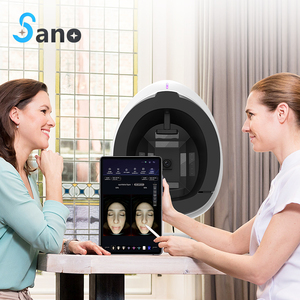
The Paradigm Shift in AI-Driven Facial Rejuvenation Diagnostics
How Multi-Spectral Photogrammetry and Deep Neural Networks (DNN) are replacing subjective consultation with volumetric baseline metrics and quantifiable clinical insights.
Engineering Beyond Standard Visual Inspection
In modern aesthetic medicine, cosmetic dermatology, and plastic surgery, the transition from qualitative visual assessment to quantitative diagnostic measurement represents the single highest driver of patient conversion and post-treatment satisfaction. Standard 2D photography suffers from lighting variations, positional shifts, and an inability to quantify subcutaneous structural modifications.
As an established Custom OEM/ODM Factory & Exporter, our manufacturing ecosystem integrates advanced multi-spectral optical modules (incorporating RGB standard light, Cross-Polarized Light, Parallel Polarized Light, UV Spectrum, Wood’s Light, and Complexion Redness Isolation) with calibrated stereoscopic camera sensors. This multi-modal hardware architecture captures high-fidelity skin topography down to 15-micron spatial resolution.

Multi-Spectrum Deep Layer Scanning
Utilizes proprietary narrowband optical filtration to separate epidermal surface reflections from dermal vascular networks. Automatically quantifies deep melanin distribution, porphyrin concentrations, and latent sun damage before it manifests visibly.
Volumetric 3D Surface Vectoring
Generates mathematically precise 3D surface meshes enabling exact volumetric measurement (in cubic centimeters) of tissue loss, malar pad sagging, and post-injection filler migration tracking across longitudinal consultation intervals.
AI Neural Clinical Reporting
Integrated local and cloud deep-learning inference engines benchmark patient skin health metrics against global demographic datasets (10M+ anonymized clinical samples) across 19 specialized diagnostic dimensions.
Commercial Grade vs. Medical-Grade Diagnostic Engine
Understanding the hardware hardware architecture and algorithm calibration distinctions that define industrial-grade OEM facial rejuvenation diagnostic systems.
| Diagnostic Feature / Specification | Standard Commercial Analyzers | Our Custom OEM/ODM Medical-Grade Platform | Clinical & Business Value Impact |
|---|---|---|---|
| Optical Spectrum Channels | 2 – 3 Spectrums (Basic RGB / UV) | 6 – 8 Precision Spectrums (RGB, PL, UV, Wood's, Cross-Polarized, Red/Brown) | Detects sub-dermal vascular & pigmentary pathology 3–5 years before surface visibility. |
| 3D Mesh Reconstruction Resolution | Simulated 2D-to-3D Software Warping | True Stereoscopic Photogrammetry (< 0.05mm volumetric accuracy) | Enables exact volume displacement calculation (cc) for injectable procedures. |
| Illumination Calibration | Uncalibrated Consumer LEDs | Constant CRI 98+ Xenon Flash & Studio Ring Arrays | Eliminates ambient light contamination; guarantees 100% reproducible baseline testing. |
| AI Diagnostic Dimensioning | 5 – 8 Basic Metric Scoring | 19 Detailed Aesthetic & Clinical Pathologies | Provides multi-layered diagnostic reports driving targeted cross-selling of treatments. |
| SDK / API & Cloud Integration | Closed System / Standalone App | Open RESTful API, Android/Windows SDK, FHIR/DICOM Cloud | Seamlessly embeds diagnostic data directly into existing EHR, CRM, and Practice Management systems. |
| Enclosure & Hardware OEM Flexibility | Fixed Plastic Molded Housings | Full Custom Industrial Design (Aluminum/ABS, Color, Logo, Ergonomics) | Establishes proprietary hardware brand identity for global distributors and franchise chains. |
Global B2B Procurement Trends in AI Skin Diagnostics (2026–2030)
Strategic purchasing vectors, technological imperatives, and procurement behavior shifts governing the international medical aesthetics supply chain.
1. Convergence of Hardware with SaaS & Ecosystem Ecosystems
Global equipment buyers are moving away from single-function standalone hardware. Future-proof procurement strategies mandate diagnostic devices that serve as edge-capture nodes connected to centralized cloud platforms (e.g., Cloud 3D patient vaults). OEM buyers require hardware with built-in remote device management (OTA firmware updates) and recurring SaaS billing enablement.
2. Strict Data Compliance & Localized Edge Computing
With tightening international data privacy laws (HIPAA in North America, GDPR in Europe, NMPA data residency rules in Asia-Pacific), enterprise purchasers now specify OEM manufacturers capable of providing hybrid edge-AI processing. Facial diagnostic algorithms must execute locally on device NPUs or store data in geo-fenced compliant cloud servers.
3. Quantitative Filler & Energy-Based Device Tracking
As anti-aging therapies shift from invasive surgery to non-surgical injectables (hyaluronic acid fillers, biostimulators like PLLA) and Energy-Based Devices (RF microneedling, picosecond lasers), buyers demand diagnostic hardware equipped with volumetric heat maps and surface subtraction algorithms to prove procedure efficacy.
Proactive Procurement Directive: OEM Standardization for Multi-Site Aesthetic Chains
For corporate aesthetic chains operating 10 to 500+ clinics, hardware inconsistency across branches is a major operational bottleneck. Customized OEM manufacturing solves this by standardizing lighting temperature, camera lens focal length, focal plane distance, and software UI branding. This ensures uniform diagnostic data collection across all global franchise locations, enabling centralized AI training and standardized patient treatment protocols.
Technological Roadmap: The Next Era of AI Facial Rejuvenation
Key technological breakthroughs currently moving from factory research labs into full-scale OEM/ODM commercial production.
A. Generative AI Aging & Rejuvenation Simulation
Moving beyond basic morphing filters, next-generation OEM diagnostic software incorporates physics-informed Generative Adversarial Networks (GANs) and diffusion models. These models accurately simulate anatomical aging—accounting for deep fat pad atrophy, bone resorption, and collagen degradation—while modeling the realistic predicted outcome of specific aesthetic treatments over 1, 3, or 5 years.
B. Hyperspectral Tissue Viability Mapping
Integrating narrow-band hyperspectral sensors allows diagnostic systems to measure sub-surface tissue oxygen saturation (StO2) and hemoglobin concentration. This optical innovation provides real-time safety monitoring during injectable procedures, helping clinicians identify early signs of vascular occlusion or ischemic distress.
C. Automated AI Skin Barrier & Micro-Texture Indexing
By coupling high-magnification optical microscopic sensors (as seen in specialized dermatoscopic devices) with deep learning, systems can automatically grade stratum corneum integrity, transepidermal water loss (TEWL) risk, and micro-relief surface roughness in under 3 seconds.
World-Class OEM/ODM Manufacturing Infrastructure
Backed by over two decades of optical innovations, clinical trial validation, and international medical device manufacturing compliance.
Proprietary Optical & Hardware Manufacturing
Our 15,000 m² cleanroom manufacturing facility houses automated optical lens assembly, spectrophotometric calibration labs, and SMD circuit board production lines to guarantee strict quality control for high-volume OEM orders.
Full Stack OEM Customization
We provide turnkey private-label customization, including industrial housing design, injection molding, custom powder-coat finishing, embedded firmware modification, custom software skinning, and language localization.
Global Regulatory & Compliance Support
All diagnostic hardware exported from our facility carries full CE (MDD/MDR), FDA 510(k) clearance compatibility, RoHS, IEC 60601-1 electrical safety compliance, and CB scheme certification for rapid global market clearance.
Validated by Leading International Aesthetic Clinicians

"3D diagnostic imaging allows me to showcase clear volumetric differences and subcutaneous skin health—hydration, quality, porosity—showing patients real treatment results."

"A fantastic diagnostic suite that analyzes redness, pigmentation, lines, and pores under the surface, enabling tailored clinical recommendation plans."
"The precise 3D analysis is vital for tracking volume addition and lifting effects, representing a true commitment to surgical and aesthetic precision."
Frequently Asked Questions for OEM Procurement
Direct answers regarding custom order parameters, technical integration, factory lead times, and regulatory compliance.
What is the Minimum Order Quantity (MOQ) for custom OEM branding?
Can we integrate your AI diagnostic engine into our existing clinic software system?
How do you ensure optical camera consistency across batch production runs?
What international medical device certifications are available for exported hardware?
What is the typical factory production lead time for bulk OEM orders?
What warranty and technical support services do you provide post-export?
Accelerate Your Brand With Custom AI Facial Rejuvenation Hardware
Connect directly with our senior optical engineers and OEM product specialists. Request factory direct pricing, full technical specifications, OEM customization catalogs, or sample unit testing today.