
Aesthetic Medicine & 3D Imaging Blog
Latest clinical research, technical advances, and practice growth insights from LifeViz®.
OEM/ODM Clinical Skin Analyzer Product Lineup
Precision-engineered multispectral skin scanners, portable dermatoscopes, and 3D AI full-face imaging systems designed for white-label customization and global B2B procurement.

3D AI Smart Full Face Skin Analyzer HD Touch Screen Scanner
- 8 Spectral Modes (RGB, UV, PL, Red/Blue)
- 36MP High-Definition Optical Sensor
- Detects Acne, Pigment, Wrinkles & Moisture

Skin Diagnosis 3D System Moisture & Aging Tester
- Deep Sub-Dermal Melanin & Sebum Mapping
- Automated Skin Age Calculation Algorithm
- OEM Chassis & Color Scheme Customization

Medical-Grade 4th Gen AI Skin Diagnostic System (6 Spectrums)
- 19 Detailed Diagnostic Clinical Reports
- Dual Shooting Modes (Frontal & 45° Side)
- Clinical Trial Protocol Integration Ready

High-Precision Portable 3D Facial Skin Monitor & Analyzer
- Lightweight Design for Medical Spa Chains
- Wireless iPad / Windows Tablet Connectivity
- White-Label App UI & Brand Logo Printing

Medical-Grade Portable Wood's Lamp Dermatoscope Scanner
- 365nm UV LED Microscopic Lens Array
- Dual Skin & Hair Follicle Diagnostic Modes
- USB-C Fast Charging & Long-Life Battery

Next-Gen 3D Volumetric Skin Analysis Facial Scanner
- Quantitative Volumetric Fillers/Botox Tracking
- Real-Time 3D Facial Contour Rendering
- Custom SDK Integration for Clinic EMRs

Clinical Dermatology Multispectral Imaging Diagnostic Station
- Cross-Polarized Vascular & Erythema Analysis
- High-Precision Standardized Light Hood
- DICOM & HIPAA Compliant Cloud Data Engine
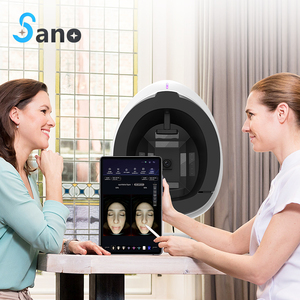
2026 AI UV Pore & Porphyrin Skin Analyzer Station
- Deep Neural Network Skin Pathogen Detection
- Automated Product Recommendation Module
- Heavy-Duty Ergonomic Salon & Clinic Tower
Why World-Class Brands Partner With Our OEM/ODM Ecosystem
Combining European-grade clinical validation algorithms with high-efficiency manufacturing capabilities to deliver customized skin analysis hardware and software solutions.
Medical-Grade Optical Accuracy
Our imaging hardware utilizes custom high-CRI flash units, cross-polarized optical filters, and industrial Sony CMOS sensors to capture reproducible sub-dermal skin details without ambient light distortion.
Turnkey White-Label Customization
From custom industrial shell design, RGB/UV LED wavelength tuning, to fully branded software interfaces (UI/UX) featuring your logo and custom product recommendation algorithms.
HIPAA & GDPR Cloud Integration
Deploy custom cloud software powered by RESTful APIs and SDKs. Enable multi-clinic chain synchronization, tele-dermatology consultations, and centralized patient image archiving.
19+ Clinical Indicator Metrics
Our diagnostic engine quantifies surface lines, deep wrinkles, pores, acne porphyria, brown spot pigmentation, vascular redness, hydration levels, skin age, and UV sun damage with high reproducibility.
Flexible Procurement & Low MOQ
We support growing medical distributors and established aesthetic brands alike with modular OEM/ODM production lines, fast-track sample prototyping, and scalable volume tiers.
Global Regulatory Compliance
Manufactured under ISO 13485 quality systems. Hardware models meet international CE, FDA clearance standards, RoHS material safety, and IEC 60601-1 electrical safety certifications.
Future Procurement Trends in Clinical Skin Analysis Systems (2026–2030)
The global medical aesthetic and skin diagnostic market is undergoing a seismic shift from subjective qualitative evaluation to data-driven volumetric and multispectral quantification. Professional dermatology practice management now demands diagnostic systems that serve not only as clinical evaluation tools but also as high-converting patient communication platforms.
1. Dynamic 3D Volumetric Shift
2D photography is being superseded by true 3D stereophotogrammetry. Modern clinics require precise volumetric displacement tracking (in mm³) to measure dermal filler degradation, facial lifting, and post-surgical swelling resolution.
2. Deep Learning AI Pathogen Detection
Procurement strategies increasingly focus on AI diagnostic engines trained on multi-ethnic datasets. Automated detection of sub-dermal porphyrin clusters, invisible sun spots, and early rosacea signs enhances treatment compliance.
3. Cloud Ecosystems & Multi-Site Sync
Multi-location clinic chains require centralized cloud databases (e.g., Neo Cloud architectures). Procurement managers prioritize OEM manufacturers offering REST APIs for seamless EHR/EMR software synchronization.
Multispectral Imaging Modalities Comparison
A rigorous engineering comparison of lighting technologies integrated into our OEM/ODM clinical diagnostic equipment.
| Spectral Spectrum / Mode | Wavelength Range | Primary Target Biomarkers | Clinical Application | Diagnostic Information Gain |
|---|---|---|---|---|
| RGB White Light | 400nm – 700nm | Surface skin texture, visible pores, open comedones | Baseline baseline facial photography & skin type identification | High-definition true-color mapping under standardized illumination |
| Parallel Polarized Light | 550nm Cross-Filtered | Epidermal specular reflections, fine lines, skin smoothness | Assessment of stratum corneum hydration & micro-relief | Eliminates glare to quantify micro-wrinkle depth and pore volume |
| Cross-Polarized Light | Polarized 90° Shift | Sub-dermal hemoglobin, erythema, spider veins, inflammation | Vascular lesion mapping, acne inflammation, sensitive skin diagnosis | Bypasses surface reflection to reveal deep cutaneous vascular networks |
| UV Fluorescence (Wood's Light) | 365nm Peak UV | Porphyrin (Propionibacterium acnes), dyschromia, basal melanin | Deep acne risk assessment, hidden UV damage, melasma depth | Excites bacterial metabolites to fluoresce orange/pink under UV excitation |
| 3D Stereophotogrammetry | Multi-Angle Mesh | Facial contour volume, vector displacement, tissue sag | Pre/Post injectable tracking (HA Fillers, Botox, Thread Lifts) | Quantifies volumetric gain/loss in cubic millimeters (mm³) |
End-to-End OEM/ODM Manufacturing Process
From initial optical engineering concept to mass production and international regulatory registration.
Optical Architecture
Selection of CMOS sensors, custom lens focal lengths, and multispectral LED array configurations tailored to your clinical specs.
Industrial & Tooling
Custom enclosure design, ergonomic booth engineering, 3D prototyping, and precision injection mold creation for mass assembly.
AI & SDK Customization
Fine-tuning diagnostic algorithms, customizing UI skinning, embedding local databases, or building dedicated cloud servers.
Validation & Testing
Rigorous optical calibration, color rendering index (CRI) standardization, thermal endurance, and electromagnetic testing.
Mass Supply & Logistics
ISO 13485 cleanroom assembly, strict batch QA inspection, drop-ship packaging, and global regulatory compliance support.
Frequently Asked Questions by OEM/ODM Buyers
Expert answers regarding custom manufacturing, software integration, minimum order quantities, and clinical calibration standards.
What is the typical minimum order quantity (MOQ) for custom OEM skin analysis devices?
Our standard Minimum Order Quantity for customized white-label hardware (custom logo printing and branded packaging) starts at 10 to 20 units. For deep ODM projects involving unique mold tooling, custom casing ergonomics, or tailored optical board designs, the MOQ generally starts at 50 to 100 units, depending on component specifications.
Can we integrate our own cosmetic skincare brand products into the AI recommendation software?
Yes, absolutely. Our software team provides a fully configurable back-end CMS. Distributors and cosmetic brand owners can easily upload their own skincare product portfolio, set matching rule logic (e.g., automatically recommending a specific vitamin C serum when high UV pigmentation is detected), and generate customized branded PDF treatment plans for patients.
How do your 3D skin scanners ensure color consistency and image reproducibility over time?
Our hardware incorporates standardized light-shielding hoods and self-calibrating LED flash arrays with high Color Rendering Index (CRI > 95). By maintaining locked shutter speeds, fixed white balance settings, and uniform optical geometry, our devices eliminate external ambient light interference, guaranteeing highly repeatable before-and-after image comparisons across weeks or months of patient follow-ups.
Do your systems support API or SDK access for integration into existing EMR/EHR clinic systems?
Yes. We offer robust Windows and Android SDKs, alongside RESTful Cloud APIs. This enables seamless data exchange between our skin diagnostic hardware and your clinic management software, electronic health records (EHR), or custom mobile applications for client management.
What international safety certifications and medical regulations do your products comply with?
All our manufacturing facilities operate under strict ISO 13485 quality management standards. Our clinical skin analysis systems carry CE medical marks, RoHS safety compliance, and meet IEC 60601-1 electrical safety standards. We also assist OEM partners with technical documentation required for local FDA, Anvisa, or Health Canada registrations.
What is the lead time for sample development and mass shipment?
Standard white-label sample units can be configured and dispatched within 5 to 7 business days. Full custom OEM/ODM prototype development usually takes 3 to 4 weeks. Mass production lead times range from 15 to 25 days post sample approval, supported by dedicated factory production lines.
Ready to Expand Your Aesthetic Device Portfolio?
Contact our senior OEM/ODM engineering team today to discuss custom hardware specifications, white-label software UI, factory direct pricing, and sample procurement.
Get Catalog