
Aesthetic Medicine & 3D Imaging Blog
Latest clinical research, technical advances, and practice growth insights from LifeViz®.
Medical-Grade Facial Aesthetic Imaging Product Portfolio
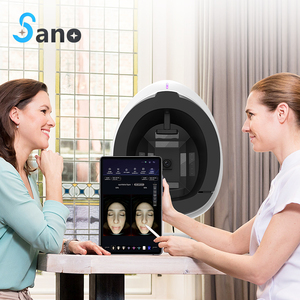
Explore our turnkey OEM/ODM facial diagnostic systems, equipped with AI volumetric analysis, multispectral dermal inspection, and cloud API connectivity for clinical med-spas and dermatological institutions.

- Deep Acne & Pore Detection
- Moisture & Sub-dermal Hydration
- Integrated HD Touch Interface

- Digital Inspection & Aging Index
- Pigmentation Structural Mapping
- High-Precision Sensor Array

- 6 Precision Optical Spectrums
- Dual Front/Side Shooting Modes
- 19 Automated Clinical Reports

- Compact Ergonomic Enclosure
- Rapid 3D Render Engines
- Instant Client Consultation UI

- UV Wood's Lamp Filter Technology
- High-Magnification Optical Lens
- Wireless Lithium Rechargeable

- High-Speed Stereoscopic Capture
- Wrinkle Depth & Volume Quantification
- White-Label Software Ready

- Cross-Polarized Dermal Imaging
- Vascular & Melanin Separation
- Clinical Trial Protocol Compatible
- Smart UV Porphyrin Detection
- AI Treatment Progression Tracking
- Multi-Language System OS
The Paradigm Shift in Facial Aesthetic Imaging: Engineering Precision & User Intent
In the contemporary landscape of clinical dermatology, plastic surgery, and non-invasive med-spa treatments, the demand for high-fidelity facial aesthetic imaging devices has evolved beyond rudimentary 2D surface photography. Modern medical aesthetic procurement managers, OEM distributors, and clinical directors require sub-dermal spectral precision, algorithmic volumetric measurement, and reproducible positioning protocols.
As a premier OEM/ODM facial aesthetic imaging device manufacturer and factory, our engineering paradigm addresses the fundamental bottleneck of clinical aesthetic documentation: eliminating optical variance caused by ambient light, patient posture shifts, and focal distance fluctuations. By establishing standardized multispectral imaging environments combined with deep-learning AI diagnostics, our systems deliver verifiable Information Gain for both clinical trials and patient consultations.
1. Multispectral Dermal Reconstruction & Sub-Surface Analysis
Standard white-light photography captures less than 30% of dermal pathophysiological markers. Original OEM optical engineering incorporates a minimum of 6 distinct light spectrums to perform non-invasive optical biopsy:
RGB Standard Daylight Spectrum
Maps macro-surface topography, severe rhytids, pore expansion diameters, and gross epidermal texture under calibrated CRI > 95 illumination.
Cross-Polarized Light Filters
Cancels specular surface glare, isolating deep dermal erythema, telangiectasia, rosacea, and sub-surface vascular networks with high contrast.
Parallel-Polarized Optical Array
Enhances fine surface wrinkles, micro-relief irregularities, and subtle skin elasticity degradation patterns across the periorbital and perioral zones.
Filtered UV Fluorescence (365nm)
Excites porphyrin accumulation secreted by Propionibacterium acnes, reveals epidermal vs. dermal hyperpigmentation, and exposes hidden UV-induced actinic damage.
Wood's Light Emission Mode
Offers specialized diagnosis for lipid barrier integrity, deep dyschromia, hypopigmented lesions, and localized sebum distribution profiles.
Sub-Dermal Infra-Red Thermal Projection
Evaluates localized tissue perfusion, inflammatory post-treatment reactions, and subcutaneous thermal dissipation post-laser/RF therapy.
2. AI-Powered 3D Volumetric Mapping & Simulation Algorithms
For plastic surgery and injectable aesthetic procedures (hyaluronic acid fillers, biostimulators, neurotoxins), 2D imaging fails to capture depth, contour displacement, and volumetric lift. Our factory-developed Stereoscopic 3D Mesh Engine constructs a high-density 3D facial point cloud (> 500,000 vertices) within milliseconds.
| Diagnostic Dimension | Legacy 2D Skin Scanners | Next-Gen 3D OEM Imaging Hardware | Clinical Intent & Value Gain |
|---|---|---|---|
| Volume Quantification | Qualitative visual estimation only | Volumetric micro-difference heatmaps (cc/mL) | Accurate post-filler retention & displacement tracking |
| Facial Vector Measurement | Static 2D linear distance | 3D vector displacement & gravitational sag vectors | Objective verification of thread-lift & surgical facelift outcomes |
| Skin Surface Texture | Pixel brightness averaging | True micro-topographical roughness index (Ra/Rz) | Sub-micron monitoring of resurfacing & chemical peels |
| Data Standardization | Uncalibrated camera angles | Guided 3D pose alignment & distance sensors | Zero-variance multi-center clinical research capability |
Future Procurement Trends: What Global Aesthetic Buyers Must Demand in 2026+
As the global medical aesthetic market scales toward an estimated $35 Billion valuation, B2B importers, chain med-spas, and pharmaceutical brands are shifting their procurement strategies. Sourcing generic hardware is no longer viable. OEM/ODM procurement managers are prioritizing the following four macro-trends:
1. Cloud-Native SaaS Integration & Tele-Dermatology APIs
Hardware devices are no longer standalone silos. Enterprise buyers require skin analyzers embedded with cloud SDKs (such as RESTful APIs and WebRTC streams). This enables patient 3D scans to sync seamlessly with Electronic Health Records (EHR), practice management software, and remote consultation platforms.
2. White-Label AI Algorithm Customization
Top-tier aesthetic chain clinics and pharmaceutical brands demand custom AI diagnostic models tailored to their proprietary product lines. Factories must provide customizable scoring metrics (e.g., custom skin age formulas, treatment product recommendation engines, and targeted progress indexes).
3. Compact Ergonomics & Multi-Modular Form Factors
While floor-standing tower analyzers remain clinical mainstays, procurement is heavily leaning toward portable, handheld, and tablet-docked form factors. Medical spas require modular devices that easily move between treatment rooms without sacrificing optical calibration.
4. Strict Regulatory Compliance & Cybersecurity
With tightening international regulations, hardware procurement requires ISO 13485 certification, FDA 510(k) clearance readiness, CE MDR compliance, and GDPR/HIPAA-compliant encrypted data storage for all cloud-transmitted facial biometrics.
Why Partner with Our OEM/ODM Manufacturing Facility?
Backing your brand with our state-of-the-art optical and software manufacturing infrastructure means gaining a competitive advantage backed by 25+ years of optical research, 14 international patents, and deployment in over 50 countries.
End-to-End Turnkey OEM/ODM
From initial industrial design concepting, optical lens assembly, board-level SMT production, to custom injection mold tooling, software GUI skinning, and final packaging development—we manage the entire lifecycle under one roof.
Medical-Grade Optical Calibration
Our cleanrooms utilize laser-aligned optical benches ensuring sub-pixel distortion control (< 0.05%), constant CRI illumination arrays, and individual sensor spectral profiling for absolute consistency across production runs.
Proprietary Software SDKs
We empower software partners and medical distributors with comprehensive Android, Windows, and iOS SDKs. Easily embed our 3D reconstruction engines and multispectral analysis metrics into your existing clinical software suite.
Frequently Asked Questions for B2B Importers & OEM Partners
Ready to Engineer Your Next-Gen Facial Aesthetic Imaging Platform?
Partner with an industry-leading OEM/ODM manufacturer. Contact our optical engineering and business development team today to request hardware samples, software SDK access, or a custom factory quotation.