
Aesthetic Medicine & 3D Imaging Blog
Latest clinical research, technical advances, and practice growth insights from LifeViz®.
Featured AI Dermatology Imaging Workstations
Explore top-tier medical and cosmetic dermatology analysis systems manufactured under ISO 13485 standards with CE and FDA compliance frameworks.

3D AI Smart Full Face Skin Analyzer HD Imaging Touch Screen Facial Scanner Detect Acne Pigmentation Wrinkles Pores Moisture

Skin Analysis Device Facial Scanner Diagnosis 3D System Testing Moisture Evaluation Digital Inspection Pigmentation Aging Pore

Medical-Grade AI Skin Diagnostic Device Puremi Fourth Gen 6 Spectrums 19 Reports Dual Shooting Modes Front/Side Face Analysis

High Quality Portable Facial Analysis Skin Monitor Analyzer 3D Digital Skin Analyzer Machine For Salon

NEW Portable Woods Lamp Medical Grade Microscope Dermatoscope Rechargeable Skin Hair Analyzer

New Arrival 3D Skin Analyzer Facial Machine Skin Analysis Scanner Facial Skin Analyzer Machine

Medical Grade Skin Analyzer Device With Imaging for Skin Condition Diagnosis
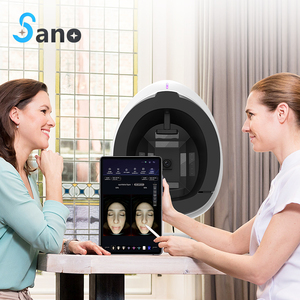
2026 Skin Analysis Machine UV Pore Detector Skin Scanner Analysis Ai Skin Analyzer Beauty Machine For Salon
Market Architecture & Industrial Capabilities of China's AI Dermatology Factories
Why leading pharmaceutical brands, clinical chains, and aesthetic distributors source multi-spectral imaging hardware directly from Chinese medical device manufacturing hubs.
Hardware Convergence & Multi-Spectral Optical Engineering
China's premier OEM/ODM medical imaging facilities have transformed traditional 2D surface photography into multi-layered diagnostic platforms. Modern AI imaging workstations integrate high-resolution industrial CMOS sensors (24MP to 36MP) with controlled optical illumination standardizing six critical light spectra:
- RGB White Daylight Mode: Captures macro-surface topography, fine expression lines, and skin roughness.
- Cross-Polarized Lighting: Eliminates specular reflection to visualize sub-surface erythema, vascular dilation, and telangiectasia.
- Parallel-Polarized Lighting: Highlights surface textures, enlarged pores, and epidermal desquamation patterns.
- UV 365nm Spectral Illumination: Exposes sub-clinical acne propionibacterium fluorescence, porphyrins, and deep stratum corneum damage.
- Wood’s Light Spectral Mapping: Isolates epidermal vs. dermal melanin depth for melasma and hyperpigmentation typing.
- Red/Brown Chromophore Separation: Uses algorithmic spectral filtering to decouple hemoglobin from melanin indices.
Deep Learning Algorithms & Information Gain Metrics
Hardware precision is validated through deep convolutional neural networks (CNNs) trained on millions of clinically annotated multi-ethnic skin image datasets. Partnering with top Chinese exporters offers global buyers actionable Information Gain across 19+ quantitative diagnostic reports:
- Quantitative Sebum & Moisture Volumetrics: Non-contact optical estimation of skin barrier integrity.
- Sub-Surface Vascular Profiling: Early identification of rosacea and post-inflammatory erythema (PIE).
- 3D Wrinkle Depth & Structural Sagging Metrics: Volumetric deformation tracking for anti-aging efficacy validation.
- Biological Age vs. Chronological Skin Age Modeling: Predictive AI regression models enhancing patient consultation conversion.
- Automated Treatment Progress Overlay: Pixel-perfect registration comparing baseline vs. post-procedure outcomes.
Key Technological Development Trends (2026–2030)
Anticipating shifts in optical hardware engineering, edge computing, and cloud-connected tele-dermatology infrastructure for global procurement strategies.
1. Edge AI Neural Processing Units (NPUs)
Future workstations are shifting from cloud-reliant image analysis to embedded hardware NPUs. Instantaneous microsecond inference enables offline real-time clinical assessment, reducing client data latency and overcoming strict cross-border health data sovereignty regulations (GDPR, HIPAA).
2. True 3D Photogrammetry & Volumetric Simulation
Transitioning beyond flat 2D overlays, Chinese R&D labs are integrating structured light stereophotogrammetry. Workstations generate dynamic 3D facial meshes, allowing plastic surgeons to simulate post-op dermal filler volumes, rhinoplasty vectors, and facelift skin redraping with sub-millimeter geometric accuracy.
3. Multi-Clinic Cloud PACS & Tele-Dermatology APIs
Enterprise chain clinics require central software dashboards. Premier exporters now supply SDK/API-ready workstations connecting directly with Electronic Health Record (EHR) systems, permitting multi-site consultation management, cloud patient archiving, and automated diagnostic report generation.
Global B2B Procurement Trends in AI Dermatology Equipment
How medical equipment importers, OEM brand owners, and aesthetic distributors optimize total cost of ownership (TCO) and regulatory compliance when sourcing from China.
Shift Towards White-Label OEM Hardware Customization
Global distributors are moving away from off-the-shelf purchasing toward strategic white-label engineering. Top Chinese factories offer modular hardware platforms, allowing importers to customize chassis industrial design, integrate branded GUI software, customize report headers, and incorporate proprietary skincare product recommendation logic directly into diagnostic algorithms.
Strict Adherence to International Regulatory Frameworks
Quality compliance is the cornerstone of modern B2B trade. Tier-1 Chinese exporters maintain comprehensive quality management systems (ISO 13485:2016), compliance with EU Medical Device Regulation (MDR 2017/745 Class IIa), US FDA 510(k) clearances, and RoHS/CE electrical safety certifications, ensuring seamless customs clearance and clinical deployment.
Why Partner with China's Premier Workstation Manufacturers
Leveraging vertical integration, optical precision engineering, and worldwide logistics support.
Vertical Optical Integration
In-house production of custom optical lenses, specialized polarizers, LED array light guides, and precision mechanical housing guarantees consistent batch-to-batch color temperature (5500K ± 100K) and distortion-free imaging performance.
ISO Class 7/8 Cleanroom Assembly
Optical sensors and high-precision lenses are assembled inside dust-free cleanrooms to prevent microscopic speckling and sensor artifacts, ensuring pristine high-definition diagnostic image capture.
Global Logistics & Lifetime Support
Exporters provide end-to-end international support including door-to-door DDP shipping, remote OTA software maintenance, modular spare parts supply, and comprehensive technician training documentation.
Frequently Asked Questions for Global Dermatology Equipment Buyers
Addressing key operational, technical, and commercial questions for medical device importers and clinic chains.
Partner with China's Leading AI Dermatology Equipment Manufacturers
Whether you require single-unit clinical evaluation systems, enterprise chain deployments, or custom OEM white-label manufacturing, our engineering team is ready to support your business goals.
Send an Inquiry