


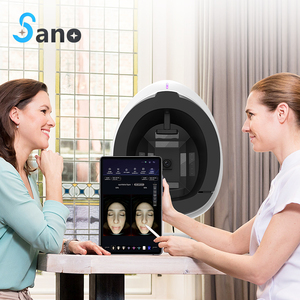
Executive Market Overview: China's Ecosystem for Anti-Aging Diagnostics
The global medical aesthetics market is undergoing a seismic paradigm shift. Traditional subjective visual consultations are being rapidly replaced by quantifiable, objective 3D optical diagnostics and AI-driven anti-aging tracking technologies. As medical spa chains, plastic surgery centers, and aesthetic dermatology clinics seek to increase patient retention and validate treatment efficacy, the demand for precision facial scanning hardware has surged globally.
China has emerged as the premier global manufacturing hub for medical-grade skin diagnostic platforms and anti-aging tracking devices. By fusing advanced optical engineering, high-throughput manufacturing supply chains, and cutting-edge artificial intelligence, Chinese original equipment manufacturers (OEMs) and original design manufacturers (ODMs) deliver high-precision systems at competitive cost structures. This whitepaper serves as an authoritative guide for international procurement directors, distributor networks, and medical device brand owners navigating the OEM/ODM ecosystem in China.
Information Gain Note: Unlike consumer-grade skin counters, medical-grade anti-aging tracking devices must measure non-invasive procedure outcomes—such as High-Intensity Focused Ultrasound (HIFU), radiofrequency (RF) skin tightening, botulinum toxin injections, and hyaluronic acid (HA) dermal fillers—using precise 3D surface topography and sub-surface spectral reflection.
The Shift from Qualitative Assessment to Quantitative Metrics
In modern clinical practice, verifying the micro-level structural changes of aging skin requires multi-modal imaging. High-end Chinese export platforms integrate multi-spectral illumination—including Standard White Light (RGB), Cross-Polarized Light, Parallel-Polarized Light, Ultraviolet (UV 365nm), and Wood’s Light—to penetrate distinct layers of the epidermis and dermis.
Volumetric Displacement
Calculates exact volumetric changes in cubic millimeters (mm³) following midface filler injections or fat grafting, exposing subtle contour shifts.
Dynamic Wrinkle Depth
Uses micro-shadow analysis to quantify fine line depth, perimeter, and density variations across pre- and post-treatment intervals.
Sub-Surface Vascularity
Cross-polarized imaging isolates hemoglobin absorption, tracking erythemato-telangiectatic rosacea and inflammation recovery profiles.
Optical Engineering & Multi-Spectral Physics Breakdown
To evaluate a supplier during the B2B procurement process, engineering heads must audit the optical calibration and sensor pipeline of the tracking device. Premium Chinese factories utilize medical-grade CMOS sensors coupled with custom prime lenses engineered to eliminate radial optical distortion.
| Spectral Modality | Wavelength / Filtering | Target Biomarker | Clinical Tracking Utility |
|---|---|---|---|
| RGB Standard White Light | 400nm – 700nm Full Visible Spectrum | Surface Micro-Relief & Skin Texture | Establishes baseline baseline aesthetic photography under calibrated diffuse flash conditions. |
| Parallel Polarized Light | Linearly Filtered (0° Angle) | Epidermal Glare & Surface Pore Structure | Highlights surface roughness, micro-scarring, and stratum corneum desquamation state. |
| Cross Polarized Light | Linearly Filtered (90° Angle) | Dermal Hemoglobin & Melanin Concentration | Eliminates specular reflection to visualize deep vascular net, erythema, and dyschromia. |
| UV Spectrum Imaging | 365nm Filtered Narrowband UV | Porphyrin Fluorescence & Sun Damage | Excites bacterial porphyrins (Propionibacterium acnes) and reveals hidden epidermal melanin. |
| Wood's Light Mode | 320nm – 400nm Peak 365nm | Epidermal vs. Dermal Hyperpigmentation | Differentiates superficial lentigines from deep dermal melasma for targeted laser therapy. |
Without rigorous optical standardization, variations in room lighting or patient positioning can produce false positives in anti-aging tracking. Top-tier exporters solve this through integrated 3D facial position matching and automated distance-sensing hardware algorithms that enforce exact volumetric registration between baseline and follow-up clinical visits.
Next-Generation Technology Trends (2026–2030)
The OEM/ODM landscape in China is advancing beyond hardware-only manufacturing toward integrated hardware-SaaS ecosystems. International buyers should align their procurement strategies with these core emerging technology trends:
Cloud-Native AI Databasing
SaaS integration allows multisite aesthetic clinic chains to centralize encrypted 3D patient records, enabling multi-location longitudinal tracking.
Real-Time Procedural Simulation
Generative AI algorithms simulate anticipated collagen synthesis 3 to 6 months post-treatment, boosting patient consultation conversion rates.
Microdermatoscope Sync
Combining macro 3D full-face scanners with handheld micro-dermatoscopes to capture localized follicular aging and cellular structure simultaneously.