
Aesthetic Medicine & 3D Imaging Blog
Latest clinical research, technical advances, and practice growth insights from LifeViz®.

3D AI Smart Full Face Skin Analyzer HD Imaging Touch Screen Facial Scanner Detect Acne Pigmentation Wrinkles Pores Moisture

Skin Analysis Device Facial Scanner Diagnosis 3D System Testing Moisture Evaluation Digital Inspection Pigmentation Aging Pore

Medical-Grade AI Skin Diagnostic Device Puremi Fourth Gen 6 Spectrums 19 Reports Dual Shooting Modes Front/Side Face Analysis

High Quality Portable Facial Analysis Skin Monitor Analyzer 3D Digital Skin Analyzer Machine For Salon

NEW Portable Woods Lamp Medical Grade Microscope Dermatoscope Rechargeable Skin Hair Analyzer

New Arrival 3D Skin Analyzer Facial Machine Skin Analysis Scanner Facial Skin Analyzer Machine

Medical Grade Skin Analyzer Device With Imaging for Skin Condition Diagnosis
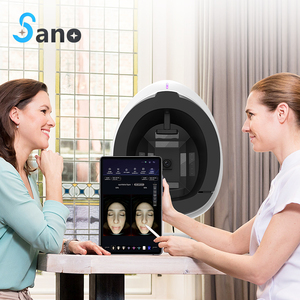
2026 Skin Analysis Machine UV Pore Detector Skin Scanner Analysis Ai Skin Analyzer Beauty Machine For Salon
Executive Industry Overview: The Paradigm Shift in Multi-Spectral Skin Diagnostics
In the rapidly evolving landscape of aesthetic medicine, clinical dermatology, and med-spa technology, multi-spectral skin analysis systems have transitioned from luxury diagnostic complements to fundamental clinical necessities. Modern aesthetic practitioners demand quantitative, reproducible, and objective sub-surface imaging to validate treatment efficacy, build patient trust, and map personalized dermatological protocols. China's optical and AI hardware manufacturing ecosystem has emerged as the global epicenter for high-precision, medical-grade skin analyzers, offering unprecedented cost-to-performance efficiency without compromising optical physics standards.
The Physics of 6-Spectrum Optical Illumination
To evaluate a manufacturer's technological authority, medical buyers must understand the spectral modalities required for comprehensive dermatological diagnosis:
1. Standard RGB White Light
Replicates natural daylight conditions for baseline epidermic assessment, documenting macro surface pore structures, dynamic fine lines, and visible surface dyschromia under uniform color rendering (CRI > 95).
2. Cross-Polarized Light
Eliminates specular glare from skin-surface sebum reflection. Polarizing lenses perpendicular to light sources isolate deep dermal inflammation, vascular lesions, telangiectasia, and hidden erythema.
3. Parallel-Polarized Light
Enhances surface relief reflection to map skin micro-texture, follicular openings, fine wrinkle contours, and epidermal desquamation patterns with micrometer-level precision.
4. UV 365nm Fluorescence
Excites epidermal fluorophores to reveal invisible sun damage, basal layer spot formation, hyper-pigmentation, and sub-surface moisture loss before it surfaces visually.
5. Wood's Light (405nm)
Detects Cutibacterium acnes porphyrin fluorescence (glowing orange/pink under 405nm narrow-band emission), dysbiosis, and sebum distribution in clogged pilosebaceous units.
6. Red & Brown Spot Separation
Proprietary RGB algorithm extraction decoupling hemoglobin absorption from melanin attenuation, providing quantified sub-dermal color maps for precise laser and IPL planning.
Why Source Skin Analysis Systems from Leading Chinese Exporters?
Over the past decade, Chinese medical optical equipment factories have transformed from simple contract assembly lines into pioneer hubs of original design manufacturing (ODM) and patented diagnostic innovation. Global brands, medical distributors, and clinic chains source directly from top-tier Chinese manufacturers due to five core structural advantages:
| Evaluation Parameter | Leading Chinese Factories | Legacy Western Suppliers | B2B Buyer Strategic Impact |
|---|---|---|---|
| Optical Hardware Cost Efficiency | Industrial integration lowers unit cost by 45% - 60% | High overhead elevates device price tag ($15k - $35k) | Enables fast ROI for clinics & higher profit margins for distributors |
| AI Algorithm Iteration | Cloud AI models updated monthly using massive datasets | Infrequent firmware/software update cycles | Access to cutting-edge diagnostic metrics without extra licenses |
| Customization & SDK Openness | Full OEM/ODM software branding, open API & SDK support | Closed proprietary software with locked ecosystems | Freedom to integrate diagnostic data into custom clinic EMR software |
| 3D Stereoscopic Accuracy | Dual/Multi-camera spatial triangulation (<0.05mm margin) | Single-camera 2D simulation or high-cost proprietary 3D | Precise volumetric measurement for facial fillers and thread lifts |
| Supply Chain Flexibility | Mass production lead times: 7 to 15 business days | Lead times: 6 to 12 weeks | Rapid market response and agile stock replenishment |
Enterprise R&D Standards & Certified Quality Control
Top China exporters adhere strictly to international medical equipment manufacturing guidelines. Facilities operate under ISO 13485 cleanroom conditions, holding CE Class I/II certifications, FDA registration compliance, and RoHS environmental standard compliance. Each unit undergoes 72-hour continuous LED aging tests, optical color temperature calibration (5500K ± 200K daylight simulation), and sub-millimeter 3D spatial volumetric verification before export dispatch.
Product & Procurement Trends Driving the 2026-2030 Market
As a global aesthetic buyer or device importer, understanding future product trajectories is crucial for safeguarding capital expenditure and avoiding technological obsolescence. The market is moving towards four critical innovations:
1. Cloud-Native SaaS & AI Facial Recognition
Modern practices demand centralized patient database cloud management. Next-gen systems utilize AI facial recognition to auto-match returning patients, eliminate manual file searches, and synchronize 3D diagnostic maps across multi-clinic chains seamlessly.
2. Predictive Aging Simulations & Treatment Vector Mapping
Generative AI algorithms project skin aging patterns 3 to 5 years into the future based on UV damage accumulation and moisture loss vectors. Crucially, these systems simulate "post-treatment outcomes" for Botox, dermal fillers, and laser resurfacing to increase consultation conversion rates.
3. Multi-Device Hybrid Integration (Full-Face + Micro-Dermatoscope)
Future procurement trends favor hybrid diagnostic systems that pair a 3D full-face imaging hood with a portable handheld digital dermatoscope/hair follicle analyzer (50x-200x magnification) for targeted lesion and scalp inspection.
4. Quantitative Volume Differential Analysis
Rather than subjective photo comparison, modern aesthetic practices require quantitative cubic-centimeter (cc) volume displacement mapping. This allows plastic surgeons and injector doctors to prove exact midface volume restoration following hyaluronic acid injections.
Frequently Asked Questions: Global B2B Sourcing & Technical Guidance
Navigating the acquisition of advanced optical diagnostic machinery involves critical engineering, legal, and operational considerations. Below are expert answers to the most common questions raised by medical importers, salon owners, and distributors.
Partner with China's Premier Multi-Spectral Optical Factory
Whether you are seeking a trusted OEM partner for private label skin analyzers, a distributor looking to expand your medical aesthetic equipment portfolio, or a chain clinic demanding bulk procurement rates — our optical engineering team is equipped to deliver world-class diagnostic solutions.