
Aesthetic Medicine & 3D Imaging Blog
Latest clinical research, technical advances, and practice growth insights from LifeViz®.
Featured Medical Skin Diagnostic Systems
Explore our flagship 3D visualizers, multispectral dermatoscope monitors, and AI facial scanners engineered for dermatologists, aesthetic surgeons, and high-end cosmetic clinics worldwide.

3D AI Smart Full Face Skin Analyzer HD Imaging Touch Screen Facial Scanner

Skin Analysis Device Facial Scanner Diagnosis 3D System Testing Moisture Evaluation

Medical-Grade AI Skin Diagnostic Device Puremi 4th Gen 6 Spectrums

High Quality Portable Facial Analysis Skin Monitor Analyzer 3D Digital Machine

NEW Portable Woods Lamp Medical Grade Microscope Dermatoscope

New Arrival 3D Skin Analyzer Facial Machine Skin Analysis Scanner

Medical Grade Skin Analyzer Device With Imaging for Skin Diagnosis
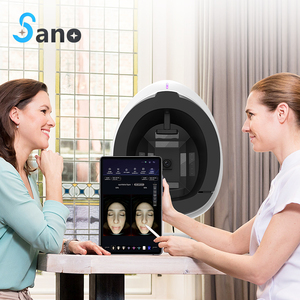
2026 Skin Analysis Machine UV Pore Detector AI Beauty Scanner
Medical-Grade Skin Diagnostics: Manufacturing Standards & Optical Physics
Clinical E-E-A-T & Regulatory Compliance
In modern dermatology and plastic surgery, optical assessment tools must transcend consumer-grade webcams and basic white LEDs. As a premier manufacturer of medical-grade skin analyzer devices, our factory adheres to rigorous ISO13485 medical device quality management standards.
Every diagnostic unit undergoes multi-point optical spectral calibration, ensuring repeatability across patient follow-ups. Our clinical diagnostic hardware provides certified quantitative baselines required by cosmetic dermatologists, clinical trials, and aesthetic surgery clinics worldwide.
Multispectral Lighting Physics
True diagnostic depth requires multi-wavelength illumination. Our machines integrate up to 6-8 distinct spectral bands, including RGB Natural White, Cross-Polarized Light (PL), Parallel Polarized Light, Parallel UV (365nm), and Deep Wood’s Light.
Cross-polarization eliminates surface specular glare to expose sub-surface erythema and micro-vascular networks, while narrow-band UV illumination excites porphyrin fluorescence produced by Propionibacterium acnes, allowing pre-symptomatic acne detection.
Medical-Grade vs. Commercial Salon Skin Analyzers
A rigorous comparative breakdown highlighting why medical institutions and premium OEM buyers specify hardware calibrated for quantitative volumetry and spectral accuracy.
| Evaluation Parameter | Medical-Grade Clinical Systems | Commercial Salon Devices | OEM Factory Standard Advantage |
|---|---|---|---|
| Optical Sensor & Optics | 20MP+ High-Resolution Sony CMOS Sensor with Custom Telecentric Lens | 5MP - 12MP Standard CMOS Web Camera Lenses | Zero distortion optical geometry for exact 1:1 facial metric scaling |
| Spectral Bands | 6 to 8 Bands (RGB, Cross-PL, Parallel-PL, UV 365nm, Wood's Light) | 2 to 3 Basic White/UV LED lights | Isolates deep epidermal melanin vs superficial hemoglobin precisely |
| 3D Volumetric Mapping | Sub-millimeter Volumetric Difference Tracking (0.1mm accuracy) | 2D Overlay Filters without depth elevation measurements | Quantifies post-treatment filler volume retention & wrinkle depth reduction |
| AI Algorithm Architecture | Trained on 10M+ Annotated Clinical Dermatological Datasets | Generic facial landmarks with visual rating heuristics | E-E-A-T validated diagnostic report generator for compliance |
| Regulatory Standards | ISO 13485, CE Medical Class I/II, FDA Registered Manufacturing | Standard CE / ROHS Consumer Electronic Grade | Full traceability, cleanroom manufacturing, clinical validation papers |
2026–2030 Global Procurement & Technological Trends
1. Cloud Ecosystem & Tele-Dermatology
Procurement is rapidly shifting from standalone local software towards secure, HIPAA and GDPR-compliant cloud management platforms. Modern medical practices require centralized multi-clinic patient data synchronization, allowing dermatologists to review high-resolution 3D skin captures remotely across branch locations.
2. Generative AI Treatment Simulation
B2B buyers are seeking diagnostic devices capable of predictive aging and post-treatment visual simulation. By leveraging deep learning models trained on pre/post-procedure volumetric datasets, systems can project the 3D outcomes of hyaluronic acid fillers, laser resurfacing, and thread lifts with accurate skin mechanics.
3. Quantitative Sub-Dermal Biomarkers
Future skin analysis is moving beyond surface wrinkles into deep biomarker profiling. Advanced multispectral processing now extracts subsurface melanin distribution, vascular dilation metrics, pore elasticity, and deep collagen density indicators to formulate customized dermatological regimes.
Why Partner With Our OEM/ODM Manufacturing Infrastructure
With over two decades of optical R&D expertise and global patent ownership, we provide turnkey manufacturing for international aesthetic brands and medical device distributors.
State-of-the-Art Cleanroom Assembly & Calibration
Our manufacturing facility incorporates dust-free cleanrooms specifically dedicated to optical lens alignment and CMOS sensor mounting. Every skin analyzer leaving our line undergoes a 48-hour continuous burn-in test alongside strict color balance calibration utilizing standardized X-Rite spectrophotometer color targets.
- Custom Industrial Design: Full shell tooling, ergonomic chassis customization, and custom colorways.
- Software & AI Integration: SDK/API access for EHR software integration, white-label UI branding.
- Global Regulatory Compliance: Comprehensive documentation package supporting regional CE, FDA, and ROHS filings.
End-to-End B2B Supply Chain & Global Support
We empower medical equipment brands with low Minimum Order Quantities (MOQ) for custom prototypes and scalable production lines for mass rollout. Our dedicated technical support team ensures minimal downtime through remote diagnostics, modular component replacement kits, and continuous algorithm updates.
Frequently Asked Questions (FAQ) for OEM Procurement
A medical-grade skin analyzer relies on optically calibrated sensors, precise monochromatic/multispectral illumination (including cross-polarization and 365nm UV), and repeatable geometry. It provides standardized quantitative metrics (such as absolute pigment density, vascular depth, and sub-millimeter 3D volume shifts) suitable for clinical trial documentation and medical records, whereas salon devices offer non-calibrated qualitative visual scores.
Our premium diagnostic systems utilize up to 8 spectrums: RGB Daylight (for true-color skin tone baseline), Cross-Polarized Light (removes surface glare to reveal dermal pigmentation and spider veins), Parallel-Polarized Light (enhances surface texture and fine line contrast), UV Light 365nm (detects porphyrins and deep UV spot damage), Wood's Light (evaluates sebum concentration and fungal acne), and specialized Red/Blue contrast channels.
Yes. We provide comprehensive OEM/ODM software branding services. This includes embedding your company logo into the GUI, customizing report headers, translating software into over 15 languages, modifying AI scoring parameters, and offering white-labeled Cloud PDF report generation for your clients.
3D volumetric mapping utilizes stereo-photogrammetry or structured light patterns to calculate exact 3D displacement vectors. Plastic surgeons and aesthetic injectors use this technology to quantify the exact volume added by hyaluronic acid dermal fillers, monitor post-op edema reduction, measure scar revision elevation changes, and objectively prove treatment efficacy to patients.
Our manufacturing factory operates under strict ISO 13485 quality management systems. Our skin analyzers comply with CE Medical Class guidelines, electrical safety standards (IEC 60601-1), RoHS environmental directive, and FCC/CE electromagnetic compatibility standards, facilitating streamlined customs clearance globally.
We offer a standard 2-Year Enterprise Factory Warranty with extended warranty options up to 5 years. In case of hardware anomalies, our modular hardware architecture allows rapid plug-and-play component replacement. We offer 24/7 technical engineering response, remote cloud software updates, and dedicated spare parts availability.
Our system supports dual storage architectures. Clinics can choose local encrypted storage on standalone workstations or utilize our end-to-end encrypted Cloud system (LifeViz / Neo Cloud compatible architecture). Cloud data transmission adheres strictly to HIPAA and GDPR privacy frameworks using AES-256 bit encryption.
Standard sample evaluation units can be dispatched within 3 to 5 business days. Commercial OEM orders involving custom shell tooling or customized software localized builds typically have a manufacturing lead time of 15 to 25 business days depending on volume requirements.
Accelerate Your Diagnostic Capabilities Today
Partner with a globally certified medical skin analyzer manufacturer. Contact our optical engineering team to request factory-direct pricing, OEM/ODM specification datasheets, or a live virtual demonstration.