
Aesthetic Medicine & 3D Imaging Blog
Latest clinical research, technical advances, and practice growth insights from LifeViz®.
Top-Tier Korean AI Dermatology Imaging Workstations
Precision 3D optical scanners, multi-spectral skin diagnostic systems, and cloud-integrated workstations engineered in South Korea for global cosmetic surgery & aesthetic medical practices.

3D AI Smart Full Face Skin Analyzer HD Imaging Touch Screen Scanner
Integrated high-definition full-face scanner featuring AI-assisted deep dermal layer extraction for acne, pigmentation, wrinkle depth, and moisture balance evaluation.

3D Digital Skin Diagnosis & Facial Moisture Evaluation Workstation
Clinical-grade diagnostic inspection system engineered to evaluate cellular aging, pore structural deformation, and localized epidermal hydration levels.

Medical-Grade AI Diagnostic Device Puremi 4th Gen (6 Spectrums)
Fourth-generation multi-spectral imaging platform offering front and dual-side face capturing with 19 comprehensive clinical diagnostic reporting metrics.

Portable 3D Digital Facial Skin Monitor & Analysis Machine
Compact yet powerful aesthetic consultation workstation designed for high-mobility clinical environments and medical spa treatment consultations.

Medical-Grade Dermatoscope & Wood's Lamp Hair/Skin Microscopic Analyzer
Handheld dual-mode diagnostic tool for trichology and micro-dermal vascular inspection utilizing calibrated Wood's ultraviolet illumination.

Next-Gen 3D Volumetric Facial Imaging & Skin Analysis Scanner
High-speed facial topology capture system built to map subtle contour variations and volume shifts post-botulinum or hyaluronic filler injections.

Clinical Medical-Grade Skin Condition Diagnostic Imaging Workstation
Hospital-grade imaging workstation certified for dermatological disease screening, sub-surface vascular mapping, and pathological skin tracking.
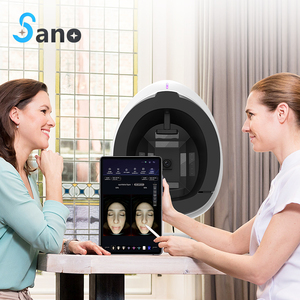
2026 AI Smart UV Pore Detector & Dermal Texture Scanning Station
Advanced 2026 flagship diagnostic workstation integrating ultra-violet fluorescent pore detection and AI predictive facial aging trajectory algorithms.
The Evolution of AI-Powered Dermatology Imaging in South Korea
South Korea’s position at the epicenter of global aesthetic medicine and dermatology innovation has established strict standard requirements for clinical diagnostic hardware. Modern medical procurement officers, plastic surgeons, and dermatological researchers no longer accept subjective 2D visual assessments. The industry standard has shifted toward multi-spectral photogrammetry and deep-learning volumetric skin analysis workstations.
Deep Dermal Layer Extraction
Cross-polarized filters neutralize surface specular reflections, allowing algorithms to isolate dermal micro-vasculature (erythema, rosacea, spider veins) and deep melanin distribution (chloasma, hyperpigmentation) up to 2.5mm beneath the stratum corneum.
Sub-Millimeter 3D Volumetric Mesh
By projecting structured light patterns or utilizing stereoscopic dual-camera sensors, Korean workstations generate precise 3D surface topographies capable of quantifying volumetric changes down to 0.1cc following dermal filler or fat grafting procedures.
Multi-Spectral Diagnostic Spectrum Comparison
| Optical Spectrum | Wavelength Range | Target Cutaneous Structure | Diagnostic Clinical Output |
|---|---|---|---|
| Standard RGB Light | 400 nm – 700 nm | Epidermal Surface Topography | Fine lines, gross pore count, surface roughness, visible blemishes |
| Cross-Polarized Light | 520 nm – 630 nm | Sub-epidermal Vascularity | Telangiectasia, active inflammation, rosacea, erythema intensity |
| Parallel-Polarized Light | 450 nm – 680 nm | Stratum Corneum & Wrinkles | Skin surface texture, crease depth measurement, pore dilation index |
| UV Fluorescent Light | 365 nm (UVA band) | Porphyrins & Sebum Glands | Propionibacterium acnes colonization, clogged pores, lipid distribution |
| Wood's Light Spectrum | 320 nm – 400 nm | Deep Melanin & Dyschromia | Subclinical solar lentigines, melasma depth (dermal vs epidermal) |
Deployment Across South Korea’s Medical Ecosystem
How top aesthetic clinics, plastic surgery centers, and clinical research institutions in Seoul utilize advanced dermatology diagnostic workstations.
Gangnam & Apgujeong Aesthetic Clinics
In Seoul's high-density aesthetic districts, diagnostic workstations serve as the primary consultation tool. Doctors utilize pre- and post-treatment 3D volumetric comparisons to show patients exact millimeter-level lifting outcomes and filler volume retention, boosting consultation conversion rates by up to 35%.
Korean Medical Tourism Hubs
With thousands of international patients visiting South Korea for skin rejuvenation, clinical imaging workstations generate automated multi-lingual PDF diagnostic reports (English, Chinese, Japanese, Russian), allowing clinics to maintain post-procedure care cloud connectivity across borders.
K-Beauty R&D Efficacy Testing Labs
Leading cosmetic conglomerates and Contract Research Organizations (CROs) in Korea employ high-resolution 3D diagnostic scanners to scientifically validate anti-aging, whitening, and skin-barrier repair claims for regulatory filings with the Korean Ministry of Food and Drug Safety (MFDS/KFDA).
Key Technology Trends Shaping Korean Dermatology Workstations
1. AI Generative Facial Aging Trajectory
By feeding millions of clinically annotated skin images into deep convolutional neural networks (CNNs), Korean workstations can accurately simulate 3-year, 5-year, and 10-year facial aging vectors, as well as model the preventive corrective impact of collagen-stimulating treatments.
2. Cloud-Native EMR & Tele-Dermatology Sync
Modern Korean diagnostic hardware natively supports DICOM 3.0 and HL7 data protocols. High-resolution raw images are encrypted and stored in centralized HIPAA/GDPR-compliant cloud vaults, allowing multi-branch clinic chains to instantly retrieve patient histories.
3. Automated Quantitative Vector Mapping
Instead of simple color-coded overlays, workstations now generate quantitative vector heatmaps. These measure exact gravitational sagging vectors (sagging distance in millimeters) along the nasolabial folds, jowls, and marionette lines.
4. Integrated Trichology & Body Modules
Korean exporters are increasingly combining facial diagnostics with micro-dermatoscope attachment lenses for scalp hair density evaluation and 3D body contour mapping for non-invasive fat reduction treatments.
Why Global Distributors Partner with Korean Hardware Suppliers
Sourcing AI dermatology workstations directly from established Korean manufacturers provides global medical distributors and aesthetic group buyers with distinct technological and operational advantages:
- Patented Optical Calibration Protocols: Over 14 registered patents covering dual flash polarization alignment, ambient light cancellation hoods, and automatic facial height tracking sensors.
- ISO 13485 & GMP Certified Facilities: All imaging workstations are manufactured under medical-device quality management systems, ensuring optical sensor consistency over thousands of scan cycles.
- White-Label OEM/ODM Customization: Fully customizable outer housing designs, branded software UI interfaces, localized software translations, and custom algorithm integration for international partners.
- Global Regulatory Compliance Support: Complete technical documentation dossiers (TCF) provided to facilitate rapid local registration for US FDA (510k), CE MDR (EU), KFDA (South Korea), NMPA, and TGA certifications.
Frequently Asked Sourcing Questions (FAQ)
Essential technical, regulatory, and logistics answers for medical equipment importers purchasing Korean skin analysis workstations.
What regulatory certifications do Korean dermatology imaging workstations carry?
Most commercial diagnostic systems manufactured in South Korea carry KFDA (Class I or Class II Medical Device) certification, ISO 13485 factory quality compliance, and CE mark. For exports to North America or Europe, leading suppliers provide full technical support documentation to assist local importers with FDA 510(k) clearances or EU MDR regulatory filings.
Can the workstation software be customized for non-English or localized regional languages?
Yes. Korean OEM suppliers offer comprehensive software localization options. Standard operating software supports English, Korean, Simplified/Traditional Chinese, Japanese, Spanish, French, German, and Arabic. Additional languages can be integrated into the UI upon request by overseas distributors.
How does 3D volumetric skin rendering differ from standard 2D facial skin photography?
Standard 2D skin analyzers only evaluate surface pixels (measuring 2D surface area of pigmentation or red spots). 3D volumetric rendering reconstructs an absolute XYZ coordinate mesh of the face. This allows clinicians to calculate precise 3D volume differences (in cubic centimeters or microliters) before and after surgical or injectable procedures, providing objective proof of volume restoration.
What optical light spectrums are essential for a complete dermatological evaluation?
For medical-grade diagnosis, a minimum of 4 spectrums is required: RGB White Light (surface structures), Cross-Polarized Light (vascularity/erythema), Parallel-Polarized Light (surface texture/wrinkles), and UV/Wood's Light (porphyrins, acne bacteria, and deep melanin). Premium workstations incorporate 6 to 10 spectral configurations for expanded clinical depth.
What is the typical flash bulb lifespan and optical calibration frequency?
Korean workstations utilize xenon or high-CRI medical LED flash units rated for 100,000 to 300,000 full-spectrum exposures (equivalent to 5–8 years of heavy clinic usage). Automated software self-calibration charts are included with each workstation to maintain sensor white-balance consistency over time.
What are the shipping, packaging, and warranty terms for international B2B orders?
Diagnostic workstations are shipped in reinforced flight cases or export-standard wooden crates with custom foam shock absorption. Standard export terms include a 12 to 24-month comprehensive hardware warranty, lifetime software updates, and remote technical support via dedicated engineer diagnostic connections.
Request Full Hardware Specifications & Ex-Factory Pricing
Connect directly with OEM product specialists in South Korea to obtain complete product catalogs, clinical study whitepapers, and international distributor pricing.