
Aesthetic Medicine & 3D Imaging Blog
Latest clinical research, technical advances, and practice growth insights from LifeViz®.
Medical-Grade 3D & AI Skin Diagnostic Systems
OEM/ODM Manufacturing Solutions for Israeli Aesthetic Clinics, Medical Centers & Injectable Distributors


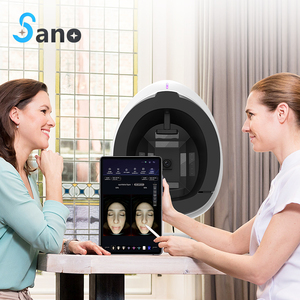
Market Dynamics: Hyaluronic Acid Filler Volume Assessment in Israel
The aesthetic medicine sector in Israel—anchored by world-class clinical hubs in Tel Aviv, Jerusalem, Haifa, and Herzliya Pituach—has transitioned rapidly from qualitative aesthetic consultation to data-driven volumetric medical photography. Israel boasts one of the highest per-capita aesthetic procedural rates globally, with dermal filler injections comprising over 45% of non-surgical cosmetic interventions. However, as patient sophistication rises alongside regulatory scrutiny from the Israeli Ministry of Health (AMAR), aesthetic practitioners faced a recurring clinical challenge: the lack of reproducible, sub-millimeter accurate volume assessment tools for Hyaluronic Acid (HA) filler retention, projection, and enzymatic degradation tracking.
Traditional 2D photography fails to capture depth, surface area curvature, or subtle volumetric shifts caused by G-prime variations in cross-linked HA gels. This paradigm shift has created immense demand among Israeli distributors, medical equipment factories, and private surgical centers for advanced 3D stereophotogrammetry platforms. By partnering directly with specialized OEM/ODM hardware manufacturers, Israeli aesthetic chains are deploying integrated 3D AI Full Face Skin Analyzers capable of measuring filler placement accuracy down to micro-liter resolution.
The Biomedical Science of 3D Volumetric Quantitave Assessment
Hyaluronic Acid is inherently dynamic; its hygroscopic properties draw water into the extracellular matrix, causing post-injection swelling that evolves over 14 to 21 days before reaching true volumetric stasis. For medical practitioners evaluating filler longevity, vascular safety, and tissue displacement, subjective visual scoring scales (such as the Merz Scale or WSRS) introduce unacceptable intra-observer variability.
Our factory-manufactured 3D imaging systems employ multi-lens stereophotogrammetry paired with cross-polarized multispectral LED flash units (5500K color temperature). By capturing synchronous images from predetermined baseline angles, the software constructs an ultra-high-density 3D surface mesh containing up to 1.2 million polygons.
Sub-Millimeter Mesh Differential
Computes pre- and post-injection 3D surface mesh distances (Δz, Δx, Δy). Color-coded heatmaps highlight volume additions in green/blue (+0.1ml to +5.0ml) and tissue compression or edema in red.
Cross-Polarized Vascular Mapping
Suppresses surface spectral glare to analyze dermal hemoglobin distribution, enabling early clinical detection of vascular compromise or superficial capillary compression post-HA injection.
AI-Driven Landmark Tracking
Automatically locates 68 anatomical facial anchor points (zygomatic arch, tear trough, nasolabial angle, mentalis) to ensure perfect 3D image superposition regardless of patient head pose variation.
Localized Application Scenarios in Israeli Aesthetic Medicine
In the Israeli market, aesthetic preferences favor distinct structural enhancements influenced by Levant facial morphometry. Aesthetic clinics in Tel Aviv and Jerusalem report specific clinical scenarios where quantitative 3D HA volume assessment is mandatory:
1. Midface & Zygomatic Complex Restoration
Israeli patients frequently request deep periosteal midface volumization to counteract solar elastosis resulting from Mediterranean UV exposure. 3D volumetric scanners calculate precise bolus expansion in the deep malar fat pad, preventing the over-filled "pillow face" syndrome by constraining total HA volume to patient-specific anatomical boundaries.
2. Nonsurgical Rhinoplasty & Dorsal Hump Correction
Liquid rhinoplasty demands extreme volumetric precision due to the high risk of vascular occlusion in the nasal dorsum. 3D surface scanning captures micro-droplet HA allocations (0.02ml resolution), offering verified proof of symmetry and nasal tip elevation without over-expanding soft tissue envelopes.
3. Tear Trough & Periorbital Micro-Injections
Thin infraorbital skin is prone to Tyndall effect and lymphatic fluid retention. Using multispectral 3D analysis, Israeli dermatologists assess skin thickness, pigment versus shadow differentiation, and monitor low-G-prime filler dispersion in the sub-orbicularis oculi fat (SOOF).
4. Jawline & Mandibular Angle Definition
Demands for high-viscoelasticity HA fillers along the mandibular angle require exact bilateral symmetry verification. 3D volumetric differential mapping allows clinicians to compare left-vs-right angle projection in real-time during follow-up consultations.
Factory Direct OEM/ODM Manufacturing vs. Generic 2D Systems
For Israeli medical device importers, aesthetic clinic franchises, and healthcare distributors, choosing direct factory-grade 3D diagnostic equipment guarantees hardware durability, optical precision, and full compliance with international standards.
| Technical Evaluation Metric | Our Factory-Direct 3D AI Systems | Generic 2D / Consumer Skin Analyzers |
|---|---|---|
| Volumetric Measurement Capability | Quantitative (mL / mm³ volumetric differential) | None (2D pixels only, no depth vector) |
| Optical Hardware | Dual 24MP Sensors, Dual 5500K Flash, Polarized Lenses | Single Webcam Lens, Uncalibrated Ring Light |
| AMAR & Medical Regulatory Status | Medical Device Class I/II, CE, FDA, ISO 13485 | Cosmetic / Non-Medical Grade |
| AI Facial Superposition | Automated 3D Mesh Registration (68 Landmarks) | Manual 2D Image Overlay (High Error Rate) |
| Software & Cloud Architecture | Encrypted Multi-Site HIPAA/GDPR Cloud Sync | Local USB Storage, No Multi-Clinic Sync |
| Israel Local Support & Supply Chain | Direct OEM Spare Parts, SDK Access, White-Labeling | Third-Party Resellers, No Factory Warranty |
Frequently Asked Questions for Israeli Buyers & Suppliers
Addressing Regulatory Compliance, Hardware Maintenance, and Importation Logistics
Partner with the Leading 3D Aesthetic Diagnostic Hardware Factory
Empower your Israeli aesthetic medical business with clinical-grade 3D stereophotogrammetry, sub-millimeter Hyaluronic Acid volume measurement, and AI skin diagnostic technology. Contact our factory engineers today for wholesale pricing, OEM specifications, and product catalogs.